FIKA NYC / THE COFFEE JOURNAL
Americano vs latte: choose the cup that fits your routine
Compare an Americano and a latte by ingredients, texture, equipment and caffeine questions, then choose a drink that fits your taste and daily routine.
Originally published Editorially updated
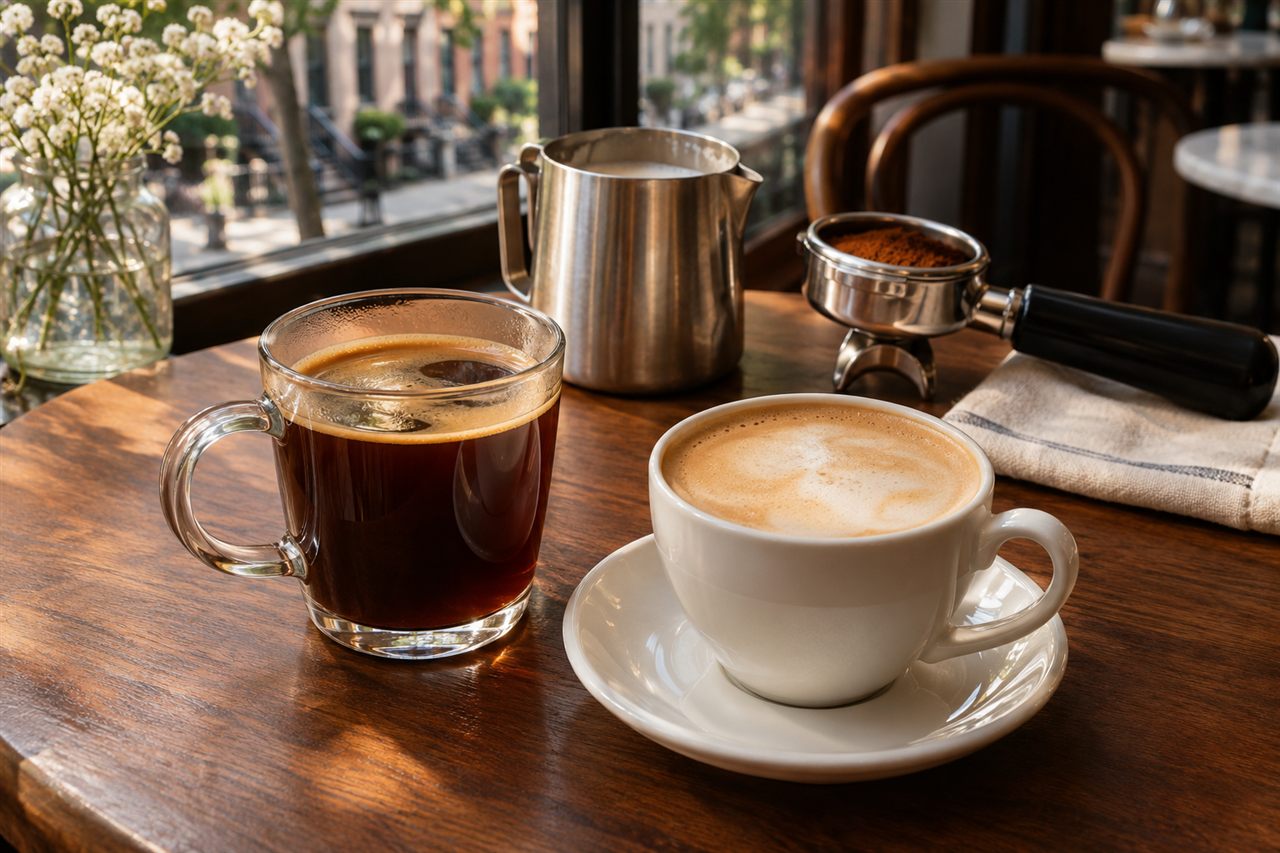
An Americano and a latte begin with espresso, then head in different directions. An Americano lengthens the shot with hot water; a latte combines it with steamed milk. That single change affects the cup's texture, the equipment you need at home and how much of the coffee you taste directly. There is no universal winner. The useful question is whether you want a longer black coffee or a softer, milk-led drink.
Start with the espresso they share
Both drinks depend on an espresso base. The National Coffee Association's espresso guide describes espresso as a concentrated coffee brewed by forcing water through finely ground coffee under pressure. The Specialty Coffee Association's espresso discussion also distinguishes espresso from other brewing methods by its pressurized extraction. A cafe may use one shot or more, so the size of the finished cup does not tell you how much espresso it contains.
This common starting point matters when you compare two drinks from the same bar. If both contain the same espresso dose, the beans and extraction shape the underlying flavor before water or milk changes how you experience it. A sour or harsh shot will still be present in either drink, although milk can soften the impression. When ordering, ask how many shots the cafe puts in each size instead of assuming a larger cup automatically contains more coffee.
An Americano keeps the coffee in front
For an Americano, hot water makes an espresso shot into a longer drink. It changes concentration and drinking volume without adding the body or sweetness of milk. You can still notice the coffee's bitterness, acidity and aroma, but in a less concentrated cup than straight espresso. The amount of added water is a preference, and cafes do not all use the same recipe. If your first Americano tastes thin, ask for less water next time before blaming the beans.
Some people care about whether the water goes into the cup before or after the espresso. That order can change how the surface looks and how the drink mixes, but it does not create a different underlying ingredient list. Focus first on a sound shot and a water level you enjoy. If you normally drink drip coffee, an Americano may look familiar, yet it remains espresso diluted with water. The National Coffee Association's brewing overview treats drip and espresso as distinct methods, a useful reminder when choosing equipment for home.
A latte changes texture as well as strength
A latte combines espresso with heated, textured milk. Milk contributes volume, body and its own flavor, making the same espresso seem gentler than it does in an Americano. The surface may carry a thin layer of foam, but a latte is not simply a black coffee with cold milk poured in. The way the milk is heated and textured affects how it integrates with the shot. The Specialty Coffee Association explains milk foam through the behavior of milk proteins during steaming.
Because the milk is a major ingredient, its choice matters. Whole, lower-fat and plant-based milks can behave differently under heat and can alter flavor. Follow the guidance for the product and machine you use; do not assume every alternative will steam like dairy milk. If you prefer to taste the beans sharply, a large latte may hide the details you enjoy. If a silky, milder cup is the point, that same balance can be exactly what you want. Ask a cafe about the milk and cup size rather than treating all lattes as identical.
Compare the two without guessing from cup size
The simplest comparison is to hold the espresso constant. Imagine the same shot divided between two cups: one receives hot water and the other receives textured milk. The Americano will be lighter in body and keep a black-coffee character. The latte will feel rounder and carry the milk's flavor. How much coffee you perceive is different from how much coffee was used. A large latte can taste mild while containing more espresso than a small Americano; only the actual recipe resolves that question.
Temperature and pace can matter too. A latte may take a little longer to prepare because the milk has to be heated and textured; an Americano requires hot water in addition to the shot. At home, consider which step you are willing to repeat each morning and clean afterward. In a cafe, choose by what you want to drink, not by a supposed hierarchy of seriousness. A useful test is to try the two at the same cafe with the same number of shots and pay attention to the texture and aftertaste.
Choose equipment for the drink you will actually make
Both drinks require a way to produce espresso. A machine that can deliver hot water makes an Americano straightforward, although you can also heat water separately. For a latte, you additionally need a way to heat and texture milk. Some espresso machines have a steam wand; other setups use a separate frother. A frother and a steam wand are not identical tools, so look at the result you want and the cleaning each one requires. Our espresso-machine comparison is a starting point for the machine decision.
Grind consistency and a repeatable recipe often matter more than a long feature list. The National Coffee Association's espresso advice recommends weighing inputs and comparing results as you adjust. If you already own an espresso machine but rarely use its steam wand, an Americano may fit your daily routine better. If you enjoy milk drinks, include a pitcher, cleaning cloth and milk storage in the space and budget. Our latte-machine guide and espresso-grinder guide can help narrow those separate choices.
Caffeine depends on the espresso, not the color
Water does not add caffeine to an Americano, and plain milk does not add coffee caffeine to a latte. The main coffee contribution is the espresso used. A cafe can vary its shot count, dose and drink size, so appearance alone is a poor way to estimate caffeine. The National Coffee Association notes that espresso is more concentrated per ounce than many other brewed coffees, but a full serving's caffeine depends on how much you drink. Do not compare a single shot with a much larger brewed cup as if the portions were equal.
If caffeine intake matters to you, ask the cafe about the number of shots and whether decaf is available. At home, record the coffee dose and recipe you actually use. A latte may also contain ingredients such as flavored syrup or sweetened milk, which change its composition without changing the basic Americano-versus-latte distinction. Look at the complete order rather than making nutrition assumptions from the drink name. This guide is about preparation and choice, not a health claim for either drink.
Make the choice in one minute
Choose an Americano when you want a longer black coffee, a simpler ingredient list and no milk-texturing step. Choose a latte when you want a creamy mouthfeel and milk to play a substantial part in the flavor. If you are unsure, order a smaller version of each on different visits and note what you liked. Add water or milk gradually at home so you can see how the same espresso changes.
Neither drink proves that a particular machine or bean is better. A well-made Americano starts with espresso you would be comfortable drinking before dilution; a satisfying latte also depends on milk texture that suits your taste. The French press versus espresso guide helps if the real question is whether you need espresso equipment at all. Use your preferred cup and morning workflow as the buying brief.
Common questions
Is an Americano just regular coffee?
No. An Americano begins with espresso and added hot water. Drip or pour-over coffee uses a different brewing method, even when the finished drink has a similar volume and appearance.
If you like black coffee but want to compare the methods, try an Americano and a drip coffee made from the same beans where possible. Pay attention to flavor and body rather than assuming one is a substitute for the other.
Does a latte always have more caffeine?
No. The milk changes volume and texture, but the espresso recipe determines the coffee contribution. A cafe may use different shot counts for different sizes and drinks, so there is no reliable rule from the name alone.
Ask how many shots are used if you are trying to manage caffeine. Decaf espresso is another option, though its availability and preparation vary by cafe.
Can I make a latte without a steam wand?
You can heat and froth milk with a separate tool, but the texture may differ from steam-wand microfoam. Follow the tool's instructions and use a milk that works with the method you have chosen.
Start with a small cup and focus on a pleasant balance between espresso and milk. Latte art is optional; the drink should be enjoyable even without a patterned surface.
Which drink is easier to make at home?
Once you can make espresso, an Americano usually adds only the hot-water step. A latte adds milk heating, texturing and cleanup. Your machine may simplify some of that work.
Choose the drink you will actually prepare on an ordinary morning. If you mainly want a long black cup and do not own espresso equipment, compare drip or pour-over as well before buying a machine.
This article draws on published brewing guidance and explains common preparations. It does not claim a hands-on equipment test, a universal recipe or a health benefit. Check the exact cafe menu and equipment instructions for your own cup.