
FIKA NYC / THE COFFEE JOURNAL
Coffee vs energy drinks: compare the actual serving
Compare coffee and energy drinks by caffeine, added sugar, serving size, ingredients and timing using labels and current public-health guidance.
Originally published Editorially updated
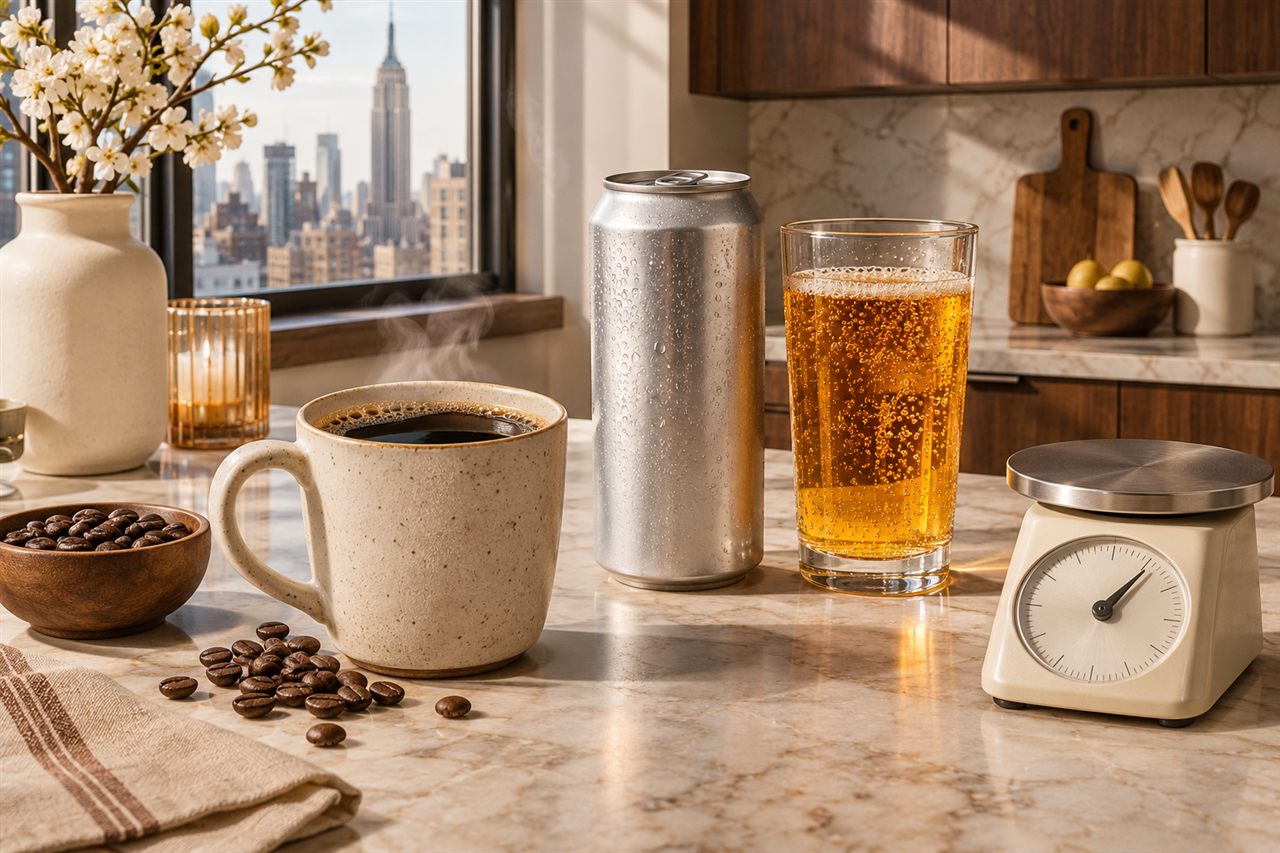
Coffee and energy drinks can both contain caffeine, but a category name does not tell you how much is in the serving you actually drink. A small can, a large can, a short espresso and a large brewed coffee are different comparisons. Begin with the volume and caffeine figure, then look at added sugars, other ingredients and the time of day. This guide is for adult readers and does not treat either beverage as a performance treatment.
Caffeine is the common stimulant
The FDA says caffeine from coffee and added caffeine are handled similarly by the body. Coffee naturally contains it; energy drinks may add caffeine directly or include caffeine-containing ingredients such as guarana. That does not make the effects identical for every person, because total dose, speed of drinking, food, sleep and individual sensitivity matter. It does mean that “natural” versus “added” is a poor shortcut for judging a dose. Read the caffeine amount where provided and count all sources you consumed that day.
The National Coffee Association explains why coffee caffeine varies by bean, preparation and serving. The FDA's category examples for a 12-ounce non-specialty brewed coffee range from 113 to 247 milligrams, while 12-ounce energy drinks in its table range from 41 to 246 milligrams. These are broad examples, not a promise about a particular cup or can. A product-specific label is more useful than comparing those category ranges as though they were exact values.
Compare like-sized servings
Write down four things: package or cup size, number of servings in the container, caffeine per serving, and whether you will drink all of it. A 16-ounce can may contain a different total from an 8-ounce can even when the products look similar. A coffee-shop cup may contain multiple espresso shots or a large amount of brewed coffee. If the cafe does not provide caffeine data, ask about the recipe and acknowledge the uncertainty rather than inventing a precise number.
Do not use “strong” flavor as a caffeine meter. Dark roast, bitterness, carbonation and sweetness affect taste without giving a reliable caffeine total. A lightly flavored energy drink may contain more caffeine than a bold-tasting coffee; the opposite can also be true. For a decision about how much stimulant you want, compare the actual amounts and volumes you will consume. If you have already had caffeine, include that in the day's total.
Sugar and other ingredients
Black coffee contains no added sugar until you put it in. A latte, syrup-flavored coffee or bottled coffee can be quite different. Energy drinks include both sugar-sweetened and sugar-free products. The FDA explains how Added Sugars appear on Nutrition Facts labels. Compare the specific labels rather than claiming that all energy drinks are sugary or all coffee is free of sugar. Milk, cream, flavored syrups and sweeteners change the finished coffee as well.
Energy drinks may also contain taurine, B vitamins or plant extracts. Their presence does not prove a drink is more effective or safer. Check the ingredient list if an allergy, medication or personal preference matters. Products differ, and marketing terms such as “focus” or “energy” are not a substitute for the actual formula. For a plain coffee comparison, note the coffee's additions too, so you are comparing finished drinks rather than an idealized black cup with a real sweetened can.
Daily intake and timing
The FDA cites 400 milligrams a day for most adults as an amount not generally associated with negative effects, while stressing that sensitivity, conditions and medications vary. That is not a target everyone should try to reach. Anxiety, palpitations, upset stomach and disrupted sleep can signal that the amount is too much for you. If you are pregnant, breastfeeding, taking medication or managing a condition, ask a healthcare professional about an appropriate limit.
Caffeine consumed late in the day can interfere with sleep, regardless of whether it came from coffee or a can. Avoid stacking a coffee, an energy drink and a pre-workout supplement without adding their stated doses. The FDA advises against energy drinks for children and teens based on medical expert guidance. A tired adult may also need food, water or rest rather than another stimulant. The label helps you make a deliberate choice; it cannot tell you how you personally will feel.
Convenience, cost and taste
A sealed can is portable and has a stated serving size. Brewing coffee at home allows more control over bean choice, concentration and additions, though its caffeine amount is less exact unless a tested product provides it. A cafe coffee provides convenience and a wider range of styles but may not disclose caffeine. Price varies with retailer, product size and location, so compare cost per finished serving at the time you buy rather than relying on a stale article price.
Taste may be the most obvious difference: coffee has roasted aromas, while energy drinks are often sweet, tart or carbonated. Neither preference is a health verdict. If you enjoy coffee, a small black or lightly milked cup may be straightforward. If you prefer a canned drink, choose its size and formulation intentionally. Water remains the simplest thirst drink, particularly when what you need is hydration rather than a stimulant.
A practical decision checklist
Before buying, identify your goal: flavor, a modest caffeine dose or convenience. Read the energy drink's caffeine and Added Sugars information. For coffee, record the cup size and any espresso-shot count, and ask the cafe if a caffeine figure is available. Consider what else you consumed that day and when you plan to sleep. If the amount is unclear, choose a smaller serving rather than assuming the beverage category is mild.
A comparison chart is only as reliable as its input. Product formulations and cup sizes can change, so recheck the current label. Our Red Bull comparison uses one specific brand and can size as an example; pre-workout versus coffee explains why powdered supplements add another layer of label reading. The most useful conclusion is a repeatable method for evaluating the exact drink in your hand.
Common questions
Is coffee always higher in caffeine?
No. Both categories span wide ranges, and serving sizes differ. Compare the product label with the size and recipe of the coffee you would actually drink.
The FDA's category tables illustrate variation, but do not identify your specific cup or can.
Are energy drinks always high in sugar?
No. Sugar-sweetened and sugar-free versions exist. Check the Added Sugars line and full ingredient list for the product you choose.
Sweetened coffee drinks also vary. Black coffee is a different comparison from a large syrup-flavored latte.
Is added caffeine different from coffee caffeine?
The FDA says the body does not handle caffeine differently because it was added rather than naturally present. The total dose still matters.
Other ingredients and the speed of consumption can affect the overall experience, so compare the full product as well as its caffeine number.
Can teens use energy drinks instead of coffee?
Medical experts cited by the FDA advise against energy drinks for children and teens. This article's comparison is intended for adults.
For a child's caffeine intake or a health concern, seek guidance from an appropriate healthcare professional.
This article draws on published brewing guidance and explains common preparations. It does not claim a hands-on equipment test, a universal recipe or a health benefit. Check the exact cafe menu and equipment instructions for your own cup.