
FIKA NYC / THE COFFEE JOURNAL
Cold brew vs iced coffee: the differences that matter
Learn how cold brew and iced coffee differ in brewing, taste, strength and preparation, then choose the better fit for your daily routine.
Originally published Editorially updated
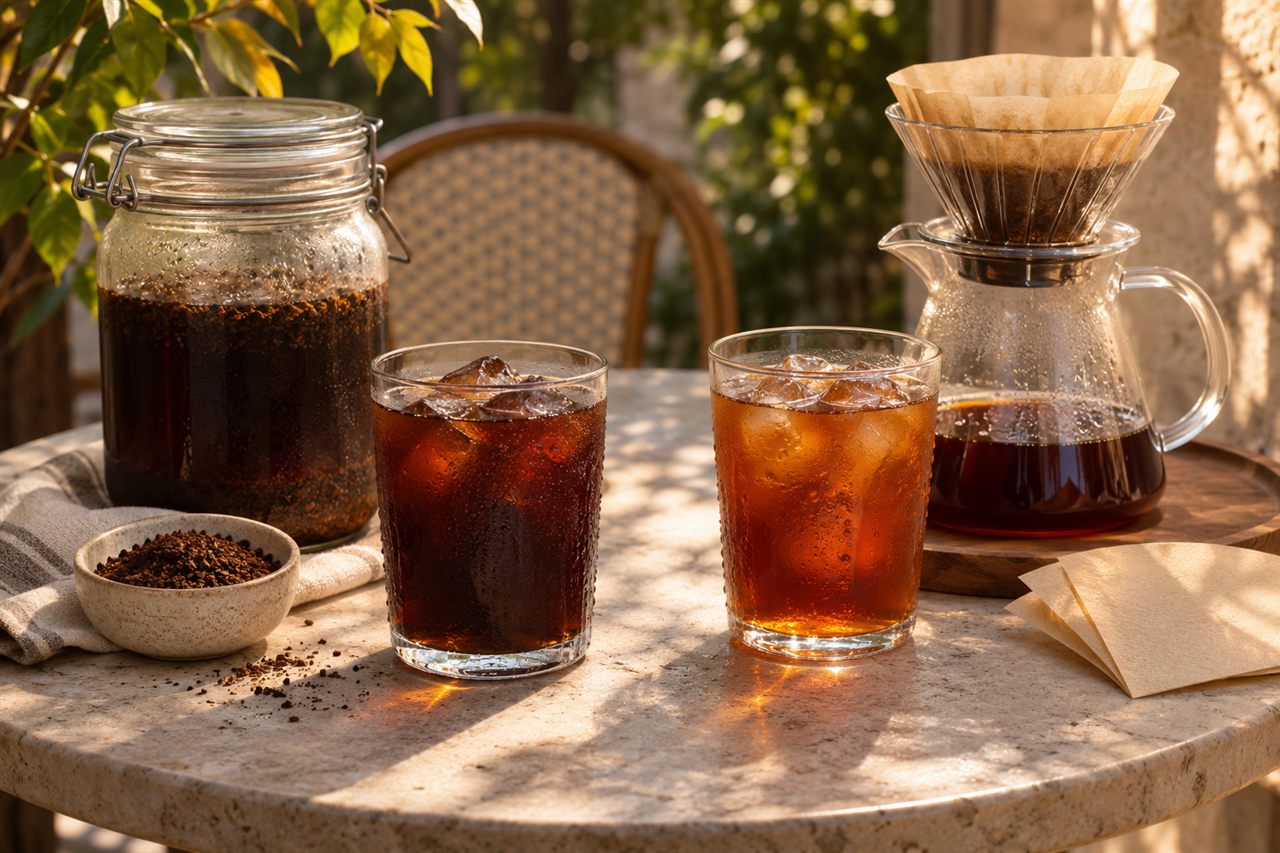
Two chilled glasses can look almost identical while taking very different routes to the table. Cold brew is extracted with cool water over time. Iced coffee is usually brewed hot and then cooled or poured over ice. That choice affects your planning, the flavors you notice and how much control you have over the final glass. Here is a practical way to decide between them without assuming one method is automatically stronger, sweeter or better for you.
Begin with the brewing method
The name “cold brew” describes extraction, not serving temperature. Ground coffee sits in cool water for a relatively long time before it is filtered. The National Coffee Association's cold brew guide describes steeping coarse grounds in cool water and then straining the mixture. You can drink the result over ice, dilute it with water or milk, or even warm it after brewing. It remains cold brew because of how the coffee was made.
“Iced coffee” describes a cold serving style. The most familiar version begins with hot brewed coffee from a drip machine or pour-over brewer and is then cooled. The hot-water extraction happens before the ice goes into the glass. A cafe may brew directly over a measured amount of ice, chill brewed coffee in advance, or use another recipe. Ask how it is prepared if the distinction matters to you.
The National Coffee Association's drip brewing explanation shows the familiar hot-water path: water passes through a bed of ground coffee and a filter. Both drinks therefore start with roasted coffee and water; temperature and time are the meaningful difference in the extraction step.
Taste is a tendency, not a rule
Cold brew often tastes rounder and less sharp to some drinkers, while hot-brewed iced coffee may preserve more of the bright notes associated with a particular bean. Those are useful expectations, but they are not promises. Coffee origin, roast, grind, ratio, water, filtration and serving temperature all shape the cup. Ice and milk can also mask or emphasize different notes.
A Specialty Coffee Association summary of sensory research tested broad claims that cold brew is sweeter and less acidic than hot-brewed coffee served cold. Its lesson for the home drinker is to avoid turning a common taste impression into an absolute statement. The same bean can give different results by method, and different beans can overwhelm a simple method comparison.
If you enjoy a lively, distinctive coffee, try a hot brew over ice with a bean you already know. If you prefer a mellow glass and plan to add milk, try cold brew. Make each first sample without sweetener so you can tell what the brewing method is contributing before changing the drink.
Strength and caffeine depend on the recipe
Do not use the words “cold brew” as shorthand for “more caffeine.” Many cold brew recipes make a concentrate that is diluted before drinking. Others make a ready-to-drink strength. Iced coffee can be brewed deliberately stronger to account for melting ice, or it can start at ordinary hot-coffee strength. A small glass of one and a large glass of the other are not comparable caffeine servings.
The amount of ground coffee, the coffee-to-water ratio, the extraction conditions and the final serving size all matter. The simplest way to compare two cafe drinks is to ask for the drink size and any published caffeine figure. For a packaged drink, read its label rather than inferring a number from its style. At home, measure coffee and water consistently so that a change in taste does not get confused with a change in dilution.
Milk, syrups and ice change perceived intensity too. A dark, undiluted cold brew can taste forceful, yet a measured serving of a different coffee may contain more caffeine. A useful personal test is to prepare both styles at a comfortable drinking strength and decide which flavor you prefer.
Plan around time and equipment
Cold brew trades active work for waiting. Combine grounds and water in a clean, covered vessel, allow the coffee to extract for the period given by your chosen recipe, then filter it. A dedicated cold brew maker is convenient, but a jar and suitable filter can also work. The preparation is easy to schedule the evening before; it is less helpful when you want a glass in the next few minutes.
Hot-brewed iced coffee suits a quicker decision if a brewer, kettle or drip machine is already in your kitchen. Brew into a heat-safe container, cool according to your recipe and serve over ice. Brewing directly onto a measured portion of ice can make a fast chilled cup, but the ice is part of the recipe's water. If you ignore it, the drink may finish weak.
Paper filtering and metal filtering can give different mouthfeel. For cold brew, careful straining keeps fine sediment out of the glass. For hot brew, the brewer and filter you already use will influence the result. Our coffee maker guide can help you compare equipment, but you do not need to buy a special machine just to learn which chilled style you like.
A sensible first recipe for each
For a first cold brew, follow the ratio and steeping instructions from a trusted brewer or coffee supplier rather than guessing a universal formula. Use fresh, clean water, grind coarsely if grinding at home, keep the vessel covered and strain thoroughly. Taste a little before adding anything. If it is a concentrate, dilute a measured portion in a separate glass until the strength suits you. Record what you changed so your next batch is easier to repeat.
For iced coffee, start with a hot brewing method you can already make reliably. Decide whether the ice will cool the coffee during brewing or after it has cooled. If the hot coffee is poured onto ice, account for the water that melting ice contributes. Taste before adding milk or syrup. A more concentrated hot brew is one option, but the right amount depends on your recipe and how much ice actually melts.
Use the same beans if you want to compare the methods. That reduces one major variable. Then make both drinks at a similar final strength and temperature. It is a kitchen comparison for your palate, not a laboratory claim about which brewing method is objectively superior.
Serve and store with care
Clean the jar, filter, brewer and serving glass before making a batch. Keep prepared coffee covered and refrigerated when you are holding it for later, especially after adding milk. The FDA's food-storage guidance advises keeping refrigerated foods at 40°F (4°C) or below and returning perishables promptly to the refrigerator. Follow the label or equipment maker's instructions for any purchased concentrate or brewing system.
There is no single safe “lasts for weeks” claim that applies to every homemade coffee recipe, container and add-in. Make a manageable batch, use clean utensils rather than drinking directly from a storage jar, and discard a drink if storage instructions were missed or it seems spoiled. Treat milk and dairy alternatives according to their own packaging once opened.
If you are packing coffee for a commute, use an insulated container and keep ingredients chilled where appropriate. Ice is useful for serving temperature but is not a substitute for good storage. The same practical habits apply whichever extraction method you choose.
Which one should you choose?
Choose cold brew when you like the make-ahead routine, want a chilled coffee ready in the fridge and enjoy experimenting with dilution. Choose iced coffee when you want to use a familiar hot brewer, value the character of a particular bean, or want a glass without planning a long steep. Neither style requires a special purchase at the outset.
For a fair first comparison, order both black at a similar serving size or make them from the same beans at home. Notice whether you prefer the texture, aroma and finish of one method. Then try your usual milk or sweetener. Your preferred drink may change with the bean, the season or the time available that morning, and that is a perfectly useful answer.
Common questions
Is cold brew the same as iced coffee?
No. Cold brew describes a coffee extraction method that uses cool water and time. Iced coffee describes how coffee is served, usually after it was brewed hot. Both may arrive in a glass with ice, so the appearance alone cannot tell you how they were made.
At a cafe, ask whether the coffee was steeped cold or brewed hot before chilling. At home, label your batches if you make both. That simple distinction also helps you repeat a recipe you enjoyed.
Does cold brew always have more caffeine?
No. A cold brew concentrate and a ready-to-drink cold brew can have very different strengths. Cup size and dilution matter, as do the coffee amount and the brewing recipe. Iced coffee can also be prepared stronger to compensate for ice.
Use a packaged drink's stated caffeine amount when available. For cafe drinks, ask about the specific serving. Avoid estimating caffeine from the drink name or its dark color alone.
Is cold brew less acidic or better for a sensitive stomach?
Some drinkers perceive cold brew as smoother or less sharp, but taste is not the same as a measured acidity or a medical effect. Research summarized by the Specialty Coffee Association cautions against a blanket sensory claim across beans and recipes.
If coffee causes symptoms for you, a brewing method is not a reliable treatment. Your own tolerance, serving size and additions matter; seek qualified medical advice for persistent concerns. This guide compares coffee preparation, not health outcomes.
Can I heat cold brew or cool hot coffee later?
Yes. A cold-brewed coffee can be gently warmed after extraction, and hot-brewed coffee can be chilled and served later. The method name follows the brewing step, so warming cold brew does not turn it into hot-extracted coffee.
Use heat-safe equipment when warming or cooling drinks, and store prepared coffee covered in the refrigerator if you are holding it for later. If you add milk or another perishable ingredient, follow its storage instructions too.
This article draws on published brewing guidance and explains common preparations. It does not claim a hands-on equipment test, a universal recipe or a health benefit. Check the exact cafe menu and equipment instructions for your own cup.