
FIKA NYC / THE COFFEE JOURNAL
Hot chocolate vs coffee: what is actually in each cup?
Compare hot chocolate and coffee by ingredients, caffeine, sweetness, preparation and serving size before choosing a warm drink.
Originally published Editorially updated
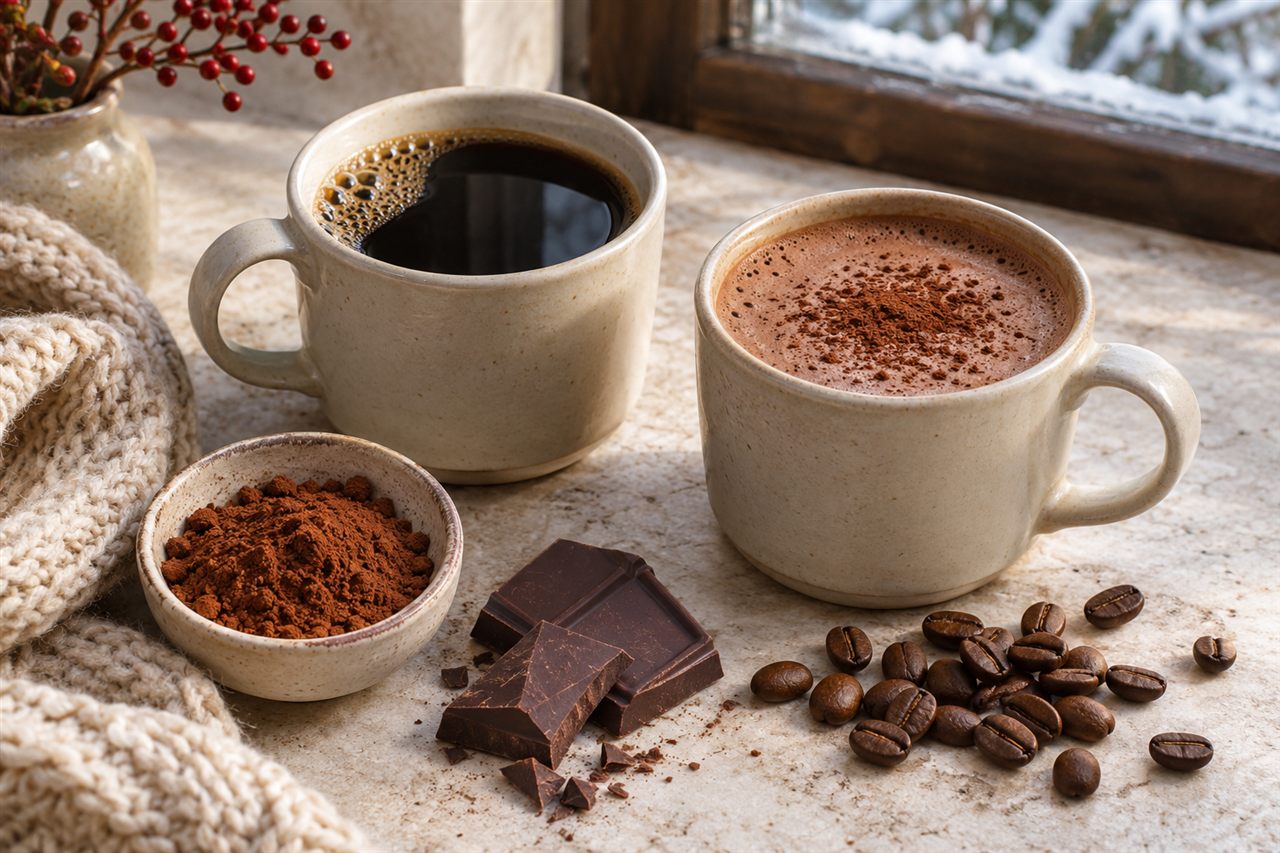
Hot chocolate and coffee can both be comforting warm drinks, but they start with different ingredients. Brewed coffee extracts roasted coffee beans with water. Hot chocolate combines cocoa or chocolate with milk or water, often with added sugar. Coffee generally provides more caffeine in a usual serving, while the sweetness and nutrition of hot chocolate depend heavily on the mix and toppings. The useful comparison is the recipe you actually order or make.
The ingredients create different drinks
Coffee beans are roasted seeds from coffee cherries. A black brewed coffee is made by extracting those beans with water. The National Coffee Association's drip-coffee guide
Hot chocolate begins with cocoa powder, melted chocolate or a prepared mix. It is usually combined with milk or water and may include sugar, vanilla, marshmallows or whipped cream. The National Institute of General Medical Sciences' cocoa explainer
A cafe mocha uses both coffee and chocolate. It should not be used as a stand-in for plain hot chocolate when comparing caffeine or ingredients. A white-chocolate-flavored drink may have a very different cocoa composition again. Ask the cafe what its powder or sauce contains if the distinction matters.
Caffeine: broad pattern and limits
Brewed coffee usually contributes much more caffeine than a typical prepared cocoa drink at comparable volumes, but there is no universal number for every recipe. The U.S. Department of Agriculture's caffeine reference table lists brewed coffee and cocoa prepared from powder separately, illustrating the difference in its examples. The table is a reference, not a measurement of the exact cafe drink you have today.
The Food and Drug Administration's caffeine guide
If caffeine matters for your household, look for the product's caffeine information or ask the cafe. A “chocolate” name alone is not a zero-caffeine guarantee, and a sweet taste is not a caffeine measure. For an individual medical limit, use qualified advice rather than a broad category comparison.
Sweetness and nutrition depend on the recipe
Black coffee has no added sugar unless you put it in. Hot-chocolate mixes commonly include sugar, but the amount varies, and a homemade cocoa drink can be adjusted. A flavored coffee with syrups and whipped cream can also contain added sugars. The Centers for Disease Control and Prevention's beverage guidance
Milk changes both drinks too. Hot chocolate made with milk differs from one made with water, and a latte differs from black coffee. Packaged cocoa mix may include milk ingredients, sweeteners or flavorings; packaged ready-to-drink coffee may include similar additions. For allergies or dietary restrictions, read the full ingredient list and ask about cafe preparation.
How preparation changes the experience
For coffee, the bean, grind, water and brewer shape the cup. A drip machine makes several mugs, while a pour-over or espresso setup asks for different effort and equipment. Brewed coffee can be enjoyed black, allowing the bean's aroma and roast to lead, or softened with milk. A plain cup does not need a sweetener to be complete.
For hot chocolate, cocoa powder needs to be mixed thoroughly so it does not leave dry clumps. A small amount of warm liquid can help make a smooth paste before the remaining milk or water is added, if the package permits. Melted chocolate needs gentle heating and stirring. Follow the mix or chocolate manufacturer's directions rather than assuming every product dissolves the same way.
Keep measuring spoons and mugs clean, especially when preparing a dairy-based drink for later. A hot chocolate mixed with milk should follow the milk package's storage guidance if it will not be consumed promptly. Reheating may change its texture, so make only the portion you expect to drink when possible. Coffee held for later also benefits from a clean covered container; the fresh cup is usually the easiest reference for taste.
Heat both drinks to a comfortable drinking temperature and be careful with hot liquid, especially when serving children. A frothy top, marshmallow or cocoa dusting changes presentation but does not reveal the underlying recipe. The amount of cocoa and sugar matters more than the photograph on a menu.
A fair side-by-side comparison
Compare a plain black coffee with a simple cocoa-and-milk hot chocolate at similar cup sizes if you want to understand the basic difference. Taste without extra syrup first. Notice coffee's roast aroma and bitterness compared with chocolate's cocoa character and milk texture. Then add the sweetener or milk you normally use and see which cup you prefer.
For caffeine, use the actual product information where possible. For added sugar, check the label or cafe nutrition details. Comparing an unsweetened coffee with a heavily topped hot chocolate says more about additions than about coffee and cocoa as ingredients. Comparing a sweetened mocha with plain hot chocolate has the same problem in reverse.
Serving temperature can affect your impression. A very hot drink may hide subtler flavors until it cools enough to sip comfortably. Try the drinks at similar temperatures and use the same kind of milk, if any, when you are evaluating their bases. That small amount of control makes a personal comparison more useful than a generic claim about which beverage is richer.
If you want chocolate flavor without much sweetness, look for an unsweetened cocoa base and add sweetener yourself. If you want a warm coffee with chocolate, order a mocha and recognize it is a combination. The names are useful starting points, but the recipe finishes the comparison.
Which cup fits the moment?
Choose coffee when you want roasted-coffee flavor and the caffeine profile of your chosen brew. Choose hot chocolate when you want a cocoa-led drink, often with milk and a sweeter profile. Neither is automatically a better choice for every person or every recipe.
Check caffeine, sugar and ingredients when those details matter to you. You may enjoy a black coffee in the morning and a small hot chocolate later, or have another routine entirely. The practical decision comes from the cup's real ingredients and serving size, not a winner-takes-all health claim.
Common questions
Does hot chocolate contain caffeine?
Usually some, because cocoa and chocolate naturally contain caffeine. The amount can differ by product, how much cocoa is used and whether coffee is added. A cup made mostly from milk and a small amount of mix is different from a rich dark-chocolate drink.
Check the package or ask the cafe if you need a closer figure. Do not treat “hot chocolate” as a guarantee of zero caffeine.
Does coffee always have more caffeine than hot chocolate?
A typical brewed coffee generally has more caffeine than a typical prepared cocoa drink, as reference tables illustrate. Specific servings can vary widely, however. A small coffee, a large rich hot chocolate and a mocha are not a simple like-for-like comparison.
For a personal caffeine limit, compare the actual products and portions. Generic averages are context, not a measured result for an individual cup.
Is hot chocolate always sweeter than coffee?
Plain hot chocolate mixes often contain sweetener, while black coffee has none added. But homemade cocoa can be made with little sugar, and flavored coffee drinks can be quite sweet. The recipe determines the result.
Read the added-sugars line on packaged drinks and account for syrups, sauces or toppings added by a cafe. Taste preferences and nutrition information are separate questions.
Is a mocha hot chocolate or coffee?
A mocha combines coffee, usually espresso, with chocolate and milk. That makes it a different drink from plain brewed coffee or a cocoa drink with no coffee. Its caffeine and added sugar depend on the cafe's shot count and chocolate ingredients.
Ask for the menu recipe when comparing it with either category. A chocolate flavor does not mean the espresso has disappeared.
This article draws on published brewing guidance and explains common preparations. It does not claim a hands-on equipment test, a universal recipe or a health benefit. Check the exact cafe menu and equipment instructions for your own cup.