
FIKA NYC / THE COFFEE JOURNAL
Orange pineapple juice: a bright two-fruit recipe
Make orange pineapple juice with a juicer or blender, adjust sweetness and texture, and handle fresh produce and leftover juice safely.
Originally published Editorially updated
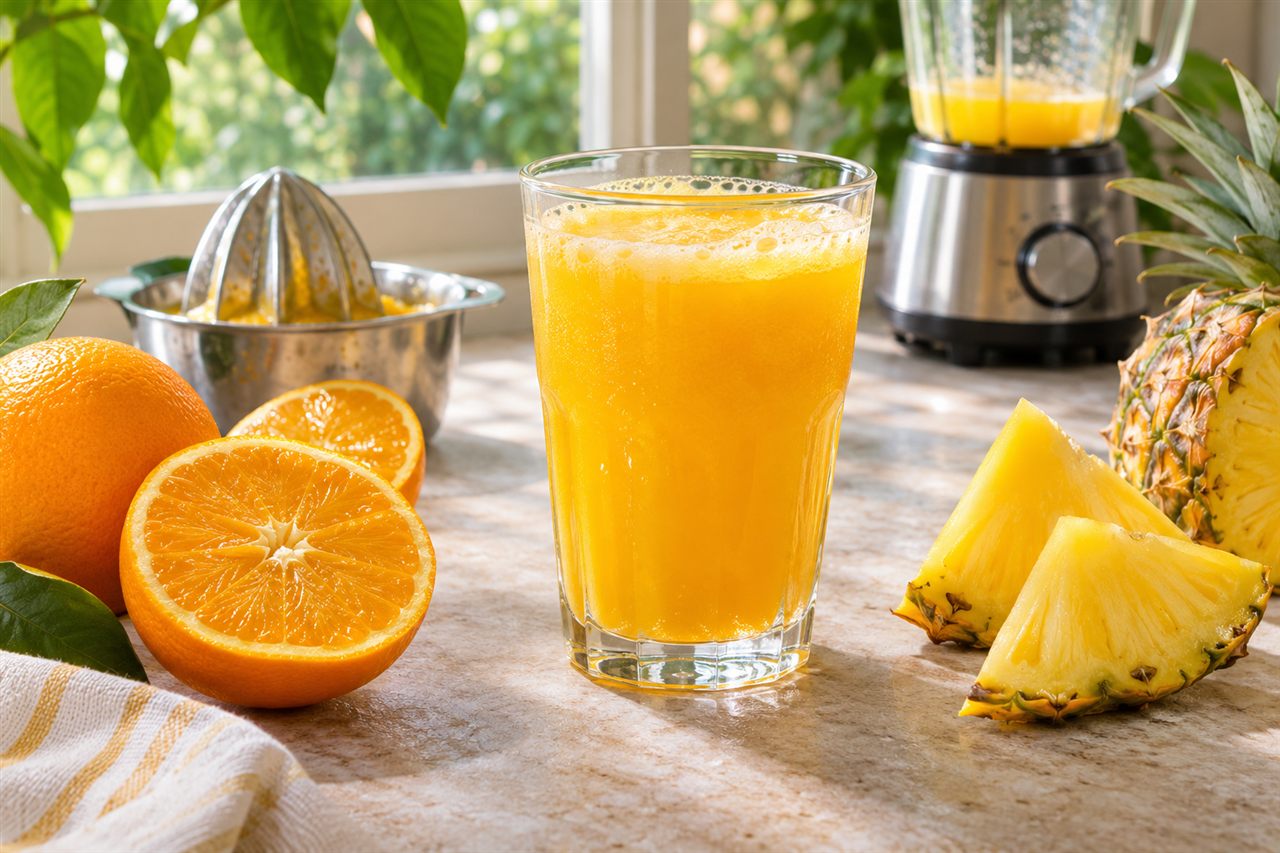
Orange and pineapple are an easy pairing: orange brings a familiar citrus flavor, while pineapple adds sweetness and a sharper tropical edge. This is a practical recipe rather than a promise of a particular health effect. You can use a juicer for a clear drink or a blender for a thicker one. The proportions below are a starting point; fruit size, ripeness and your preferred dilution will change the result.
Ingredients and the basic balance
For about two small servings, start with three medium oranges and about one generous cup of peeled, cored pineapple pieces. Have a little chilled drinking water and ice ready if you want to lighten the drink. A squeeze of lime is optional, but taste the juice first: a tart pineapple may make extra acid unnecessary. Avoid adding sugar before tasting. If the fruit is very sweet, a small amount of water can bring the citrus back into balance.
Choose fruit that looks sound and has no visible mold or damage. Wash the oranges and pineapple before cutting, even though you will remove the peel: a knife can carry surface contamination into the cut fruit. The FDA produce-cleaning guidance recommends rinsing under running water and avoiding soap or detergent on produce. Clean the cutting board, knife, juicer parts and hands before preparation. Use a separate clean surface if raw meat has been prepared nearby.
Juicer method
Peel the oranges and remove any obvious seeds. Cut the pineapple into pieces that fit your juicer; remove the tough outer skin and core as needed for your machine. Feed the fruit alternately so pineapple fibers do not crowd the chute, following the equipment instructions. Stir the collected juice, taste and add water a tablespoon at a time if it is too concentrated. Pour over ice just before serving. Yield varies substantially with the fruit and machine, so use the ingredient amounts as a guide rather than a guaranteed volume.
Juicer pulp still contains fruit material. If you prefer less waste, a blender method keeps more of the edible fruit in the glass. If you do use a juicer, rinse its mesh and cutting parts soon after use; dried pineapple fiber and citrus pulp are harder to remove. Follow the manufacturer's cleaning instructions, especially around sharp screens and seals. A very fine strainer can smooth the juice further, but it also removes more pulp.
Blender method and texture
Add the peeled fruit to a blender with a small splash of chilled water, then blend until smooth. If the machine struggles, stop and add a little more water rather than forcing the blades. For a drink with body, pour the blend as it is. For a thinner juice, strain it through a fine sieve and press gently; do not expect the same clarity or yield as a dedicated juicer. Blending with the edible pulp gives a different texture and generally retains more fiber than straining. The CDC highlights whole fruit and fiber when discussing fruit choices.
Chill the fruit first if you want a cold result without much ice dilution. If the blended drink separates while it sits, stir it before pouring. A few small bits of pineapple are a texture choice, not a defect, provided the fruit was properly prepared. Do not blend orange peel or pineapple skin into this recipe; both can make the drink unpleasant, and your blender may not handle hard skin well.
Variations and serving ideas
For a more citrus-led drink, use four oranges and less pineapple. For a tropical version, increase pineapple gradually, taste and add water if needed. A small piece of fresh ginger can add warmth, but use a light hand because it can overwhelm the fruit. Mint leaves can be bruised into the finished glass rather than processed through the juicer. If serving children or guests, offer the plain recipe first and put optional flavorings on the table.
The same mixture works as a base for a nonalcoholic spritz: fill a glass partway with chilled juice and top with sparkling water just before drinking. Sparkling water changes the dilution and perception of sweetness, so adjust by tasting. You can also freeze small portions in an ice tray to flavor water later; use clean containers and label what is in them. These are serving ideas, not preservation methods that make unsafe fruit safe.
Fresh juice and food safety
Freshly prepared juice is unpasteurized. The FDA explains that untreated juice can carry harmful bacteria if pathogens were present on produce or introduced during handling. Washing and clean equipment reduce risk but do not make homemade juice equivalent to pasteurized packaged juice. The FDA identifies children, older adults, pregnant people and people with weakened immune systems as groups for whom untreated juice poses particular concern. Choose pasteurized juice for those groups when safety is the priority.
Serve this recipe promptly. If you make more than you will drink, transfer it to a clean covered container and refrigerate promptly, following the FDA's general cold-storage advice. Discard juice left at room temperature for an extended period or any batch with an off smell or visible spoilage. Flavor and color also change after mixing, so small batches are usually more satisfying. Rinse the equipment immediately and dry it thoroughly before storage.
Buying and preparing the fruit efficiently
A ripe pineapple may smell pleasantly fruity near its base, but color and smell are imperfect indicators. Choose one without soft, leaking or moldy areas. If cutting a whole pineapple feels like too much work, fresh pre-cut pineapple is convenient; keep it refrigerated and follow its use-by instructions. For oranges, pick fruit that feels heavy for its size and has intact skin. The flavor will vary, so make the first small batch before committing all the fruit to a pitcher.
Set up a bowl for peels and a clean container for prepared pieces before you begin. Cutting the pineapple into even chunks helps a blender or juicer process it. Remove tough eyes and the fibrous core if your equipment struggles with them. If you use pre-cut fruit, still clean the equipment and work surface. Fruit left on a warm counter while you hunt for a strainer is avoidable; prepare your tools first. This simple order of work makes a quick recipe genuinely quick.
Common questions
Can I make orange pineapple juice without a juicer?
Yes. Blend peeled fruit with a little water, then drink it thick or strain it. Straining changes the yield and removes pulp, so taste before adding more water.
A blender also allows you to keep the edible fruit pulp. Add water sparingly at first; you can thin a drink easily but cannot undo over-dilution.
Do I need to add sugar?
Usually not as a starting step. Ripe pineapple and oranges may be sweet enough. Taste the finished juice and adjust with water or a little lime according to the fruit you have.
Fruit ripeness changes sweetness more than a fixed ingredient list can predict. Adjust one ingredient at a time and write down the balance you prefer.
Is homemade juice pasteurized?
No. Washing produce and cleaning equipment are important, but homemade fresh juice does not undergo a pasteurization step. FDA guidance notes greater risk from untreated juice for some people.
The FDA advises particular caution for people more vulnerable to foodborne illness. Choose a pasteurized commercial product when that is needed.
Can I use canned pineapple?
You can, but choose a product you like and check whether it is packed in juice or syrup. Its sweetness and texture will differ from fresh fruit; start with a smaller amount and adjust.
Canned fruit packed in syrup can make the drink much sweeter. Rinse or drain it if appropriate and check the ingredients before adding more sweetener.
This article draws on published brewing guidance and explains common preparations. It does not claim a hands-on equipment test, a universal recipe or a health benefit. Check the exact cafe menu and equipment instructions for your own cup.