FIKA NYC / THE COFFEE JOURNAL
Americano vs brewed coffee: which cup is right for you?
An Americano and brewed coffee can look alike. Compare the brewing path, flavor, caffeine, equipment and ordering choices before your next cup.
Originally published Editorially updated
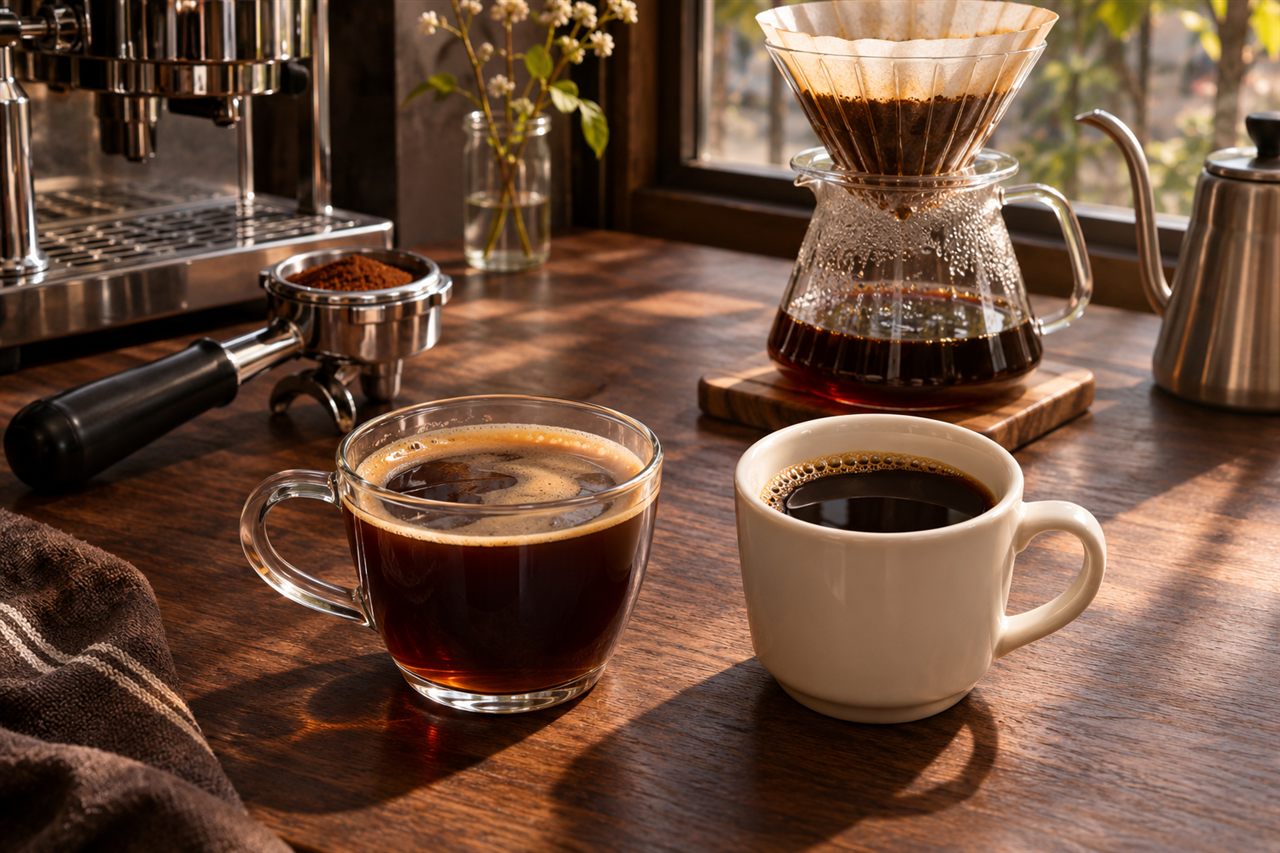
A black Americano and a cup of brewed coffee can arrive in similarly sized mugs, yet they follow different brewing paths. An Americano begins as espresso and is lengthened with water. What many menus call “regular coffee” is coffee extracted in a filter brewer, such as a drip machine or pour-over cone. Both can be satisfying daily choices. The useful question is which flavor and preparation routine you prefer, rather than which cup looks darker.
The difference starts before the water is added
An Americano is built from espresso. An espresso machine forces water through a compact bed of finely ground coffee to produce a small, concentrated drink; hot water is then added to make a longer cup. The National Coffee Association's espresso guide explains the short extraction and the equipment it requires. Adding water changes the final strength and volume but does not change the way the coffee was extracted.
Brewed coffee describes a wider family. In a typical drip machine, hot water flows through ground coffee and a filter into a carafe. The National Coffee Association's drip guide describes the process and practical variables. A hand-poured filter brewer uses the same broad route while giving the brewer more control over pouring. These methods extract a full mug directly rather than making a small espresso base first.
The word “regular” is imprecise. Some cafes mean a batch-brewed filter coffee, some mean a particular size or roast, and others may offer pour-over as an alternative. If you are comparing two actual menu items, ask what brewer makes the non-Americano cup.
How flavor and texture may change
Espresso begins dense and concentrated. When it is diluted into an Americano, some of the espresso character remains, but the result is no longer as thick or intense as the shot itself. A freshly made Americano may show traces of crema, the foam associated with espresso, although its appearance changes quickly. The final cup depends strongly on the beans and the amount of water added.
Filter-brewed coffee may feel lighter and more transparent, especially through paper. Its aroma can make the bean's origin and roast easier to notice. A metal filter can leave a different texture, so even “regular coffee” is not one fixed taste. The National Coffee Association's pour-over guide shows how grind, filter and pouring choices shape a filter cup.
Do not assume one method is automatically bitter or smooth. A poorly prepared drink of either kind can disappoint. If you know you enjoy a particular cafe's espresso, an Americano gives you that base in a longer form. If you value the character of a filter brew, order the brewed coffee and ask which beans are on.
Caffeine: compare the actual serving
An espresso shot is more concentrated per ounce than a typical filter coffee, but an Americano is not automatically the higher-caffeine mug. Water added after extraction increases volume without adding caffeine. A double-shot Americano and a large batch-brewed coffee also start with different quantities of ground coffee. The final comparison depends on the recipe and serving size, not the menu name alone.
The National Coffee Association's caffeine FAQ notes that coffee's caffeine varies with cup size, coffee type and preparation. That is a better guide than guessing from color. A dark-looking drink is not a measurement, and a large mug may contain more caffeine simply because it contains more brewed coffee.
If you monitor your intake, ask the cafe whether its Americano uses one or two shots and whether it publishes a caffeine figure for its brewed coffee. At home, keep track of the amount of coffee you use and the portion you actually drink. Choose decaf where offered if you want the style without as much caffeine, while remembering that decaf is not necessarily caffeine-free.
What each drink asks of your kitchen
For an Americano at home, you need a way to prepare espresso or a close espresso-style base, plus hot water and a vessel large enough for the final drink. An espresso machine offers the most direct route, but it requires cleaning, a suitable grind and practice. The time spent pulling a shot is short; learning to repeat a good one may take longer. Our espresso machine guide lays out equipment choices if you are already considering that purchase.
Filter coffee can begin with a simple pour-over cone, a paper filter and a kettle, or with a drip machine that makes several cups at once. A drip machine can suit households that want multiple mugs with little active attention. Pour-over gives the brewer more direct control over water and timing, but asks them to stand at the counter. Neither route requires an espresso machine.
Start with equipment you already own. There is little reason to buy a second brewer before tasting a well-made example of the other style at a cafe. The difference you enjoy might come from the beans or roast rather than from the brewing method itself.
How to order a fair comparison
Order both drinks black at roughly the same final size if you want to focus on the coffee. Ask how many shots are in the Americano and what coffee is being brewed for the filter option. Try them before adding milk or sugar. Those additions can be enjoyable, but they can make a first method comparison harder to read.
Notice the first aroma, the body while sipping, and the finish after the cup cools a little. An Americano may have the recognizable profile of the cafe's espresso blend; the brewed cup may highlight a different bean entirely. If so, you are comparing both brewing method and coffee selection. A cafe that uses the same beans for both can make the method difference easier to understand.
Price and speed can vary with the cafe. A batch brew may already be ready to pour, while an Americano is normally prepared to order. A pour-over may take longer than either. If your morning routine depends on speed, ask what is available at the time you visit instead of assuming all “brewed coffee” has the same wait.
Make the choice that fits the day
Choose an Americano if you like the cafe's espresso and want it in a longer, water-based cup. Choose brewed coffee if you like filter texture, want to try a featured bean, or need several cups from a shared batch. Both can be adjusted for strength through the recipe; adding water to an Americano is not the same as changing its original espresso extraction.
You may prefer one at home and another at a cafe. That is sensible: equipment, beans and time all change the result. If a cup tastes weak or harsh, ask how it was made or adjust one variable at home before deciding the entire style is wrong for you. A good decision comes from the actual drink, not from a fixed ranking of the two names.
Common questions
Is an Americano just watered-down coffee?
An Americano is espresso diluted with hot water. “Watered-down coffee” misses the important first step: espresso is extracted under different conditions from typical drip or pour-over coffee. The added water changes the final volume and intensity, not the original brewing method.
You can adjust the water amount to suit your palate. More water gives a lighter cup; less keeps more of the concentrated espresso impression. Ask your cafe for its usual recipe if you want to know what will arrive.
Is an Americano stronger than regular coffee?
“Stronger” might mean flavor intensity, concentration or caffeine. An Americano can carry an espresso-forward flavor, but its final concentration depends on the water added. A brewed coffee can be made at various strengths too.
For caffeine, compare the exact shot count and cup size. A large brewed coffee can contain more total caffeine than a single-shot Americano. Menu labels alone do not establish the answer.
Can I make an Americano with a drip machine?
A drip machine makes brewed coffee by passing water through grounds and a filter. Adding hot water to that coffee makes a diluted filter coffee, not an Americano, because there was no espresso extraction step.
If you do not own espresso equipment, try an Americano at a cafe before buying anything. You may discover that your existing filter brewer already makes the cup you prefer.
Which works better with milk?
Either can take milk. An Americano retains an espresso base beneath the added water, while brewed coffee brings its own bean and filter character. The effect depends on the coffee, the milk and how much you add.
If your goal is a mostly milk-based espresso drink, a latte is another menu option. Our Americano versus latte guide explains that distinction. For a first Americano-versus-filter comparison, taste both black, then add milk if that is how you usually drink coffee.
This article draws on published brewing guidance and explains common preparations. It does not claim a hands-on equipment test, a universal recipe or a health benefit. Check the exact cafe menu and equipment instructions for your own cup.