
FIKA NYC / THE COFFEE JOURNAL
Bio Coffee: ingredients, caffeine and claims explained
Examine Bio Coffee’s published ingredients, instant-coffee format, caffeine uncertainty and health claims before buying a sachet product.
Originally published Editorially updated
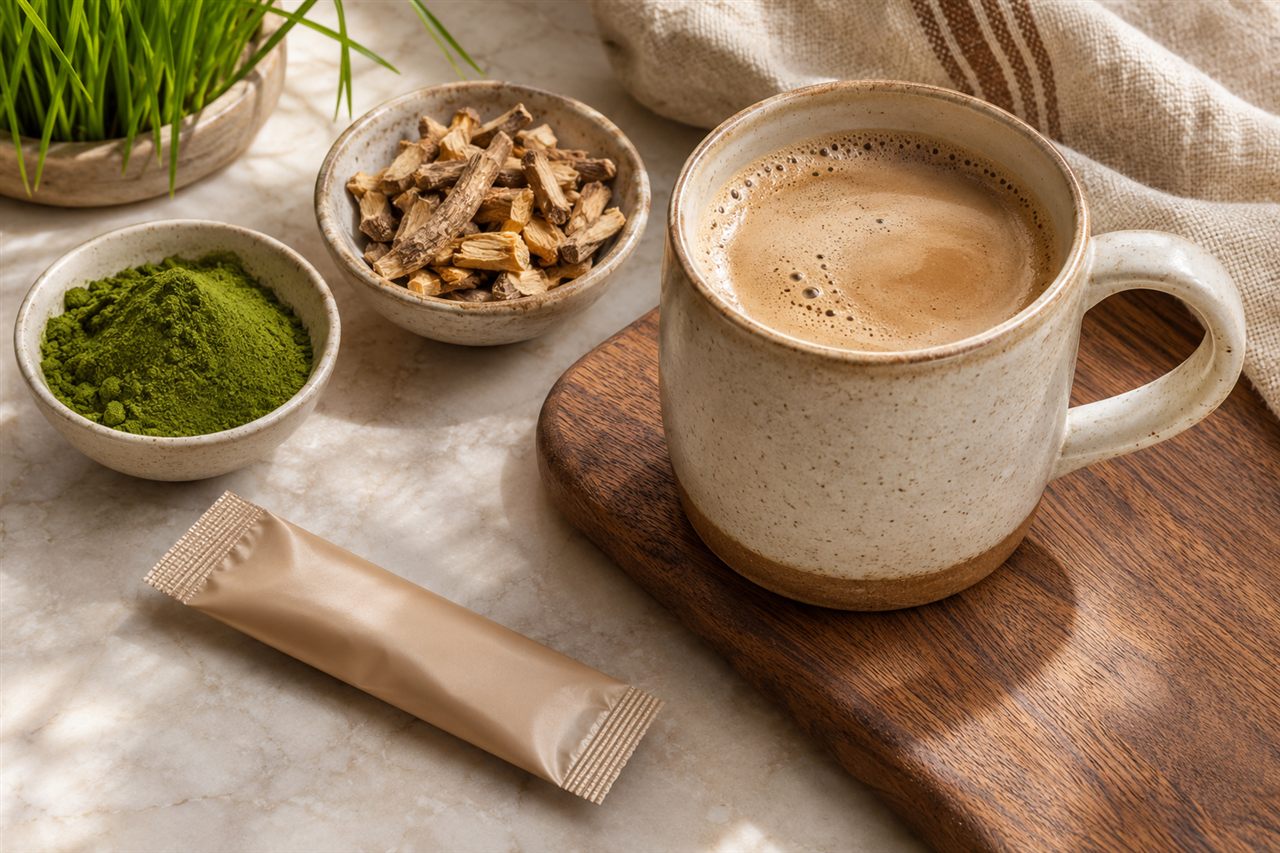
Bio Coffee is a branded instant-coffee mixture, not a recognized coffee-growing category. Its own FAQ identifies instant Arabica coffee, a non-dairy creamer, a chicory-derived oligosaccharide and wheatgrass. Those ingredients are more informative than slogans about alkalinity or “the healthiest coffee.” The older Fika page made unsupported claims about disease prevention, vegetable servings and being caffeine-free. This guide separates what the manufacturer lists from what would require independent evidence or a current package label.
What is in the sachet?
The Bio Coffee FAQ lists four ingredient groups: instant Arabica coffee, non-dairy creamer made with tapioca-derived glucose syrup and palm-kernel vegetable fat, a chicory-root oligosaccharide, and wheatgrass. Check the package you are considering because formulas and labeling can change. The presence of “non-dairy” creamer does not automatically answer every allergen or dietary question; read the full current label, including any advisory statements.
Instant coffee dissolves in water, so the product is prepared differently from brewing ground beans through a filter or espresso machine. The creamer and other ingredients change the flavor and texture. If you want black coffee with no added ingredients, a plain instant coffee or brewed coffee may be a simpler comparison. If you like a sweetened or creamy convenience drink, evaluate the sachet as a complete formulated beverage rather than comparing it with a bare coffee bean.
Caffeine-free is not established
The manufacturer lists instant Arabica coffee, which normally contains caffeine. The older Fika article called Bio Coffee caffeine-free, but that statement should not be repeated without a reliable product-specific figure or decaffeination claim on the actual package. The FDA notes that even decaf coffee is not necessarily caffeine-free. If caffeine avoidance matters to you, contact the manufacturer for the current amount per sachet and check whether the version you buy is explicitly decaffeinated.
Do not infer low caffeine from the presence of wheatgrass, chicory or creamer. Adding ingredients can change the concentration in the finished cup, but it does not erase caffeine from the instant coffee portion. The water volume you use changes taste intensity, not the amount originally present in the sachet. People who are pregnant, taking relevant medication or sensitive to caffeine should use personal medical guidance rather than a vague marketing description.
Organic and label language
Bio Coffee's site describes the product and some ingredients as organic. The USDA explains distinct organic labeling categories for U.S. packaged products, including “100% organic,” “organic” and “made with organic ingredients.” A claim about one ingredient is not necessarily a claim about the finished sachet. Inspect the current package for the precise label wording and certification information rather than relying on a general website statement.
“Natural,” “bio,” and “organic” also do not prove a product is healthier for a particular person. The ingredient list and Nutrition Facts panel answer different questions: what is present, how much of key nutrients is in a serving, and whether added sugars appear. The FDA explains how added sugars are shown on labels. A creamer based partly on glucose syrup deserves a label check; the ingredient name alone does not give you the grams per prepared cup.
Health claims need evidence
The Bio Coffee website makes broad claims about alkalinity, digestive effects and other benefits. We have not found product-specific clinical evidence sufficient to repeat those as established outcomes. The Federal Trade Commission says objective health claims require competent, reliable scientific evidence. A biological property of wheatgrass or chicory does not automatically prove that a finished sachet prevents disease or changes body pH in a meaningful way.
The old Fika page suggested one cup could replace multiple vegetable servings and make coffee suitable for people with diabetes. Those claims should not be made from this ingredient list. If a medical condition or blood-sugar management is relevant, read the current Nutrition Facts panel and ask a clinician or dietitian about the whole diet. A cup of coffee mixture is a beverage, not a substitute for treatment or vegetables.
Taste, preparation and comparison
Make the sachet according to its current package directions. Use a measured amount of water so you can reproduce the taste. More water can make it milder; less can make the creamer and coffee more intense. Because it includes non-coffee ingredients, compare it with other flavored or creamy instant drinks as well as with plain instant coffee. A blind taste test with equal serving temperatures can help you decide whether you actually enjoy it, but this article does not claim Fika performed one.
Price per sachet is more relevant than price per box, especially if serving sizes differ. Check the number of sachets, shipping, subscription terms and return policy at purchase time. A product can be convenient yet poor value for someone who already makes coffee easily. Conversely, a single-serve format may suit a travel routine. The decision is about flavor, ingredients, caffeine certainty and cost for your use, not a claim that one brand is the healthiest coffee in the world.
Questions to ask before buying
Read the package for caffeine per serving, total and added sugars, allergens, organic certification wording and preparation directions. Compare these with what you want from a morning drink. If the caffeine amount is absent, ask the manufacturer directly. If a health claim is the main reason you are considering the product, look for reliable evidence about this exact formulation rather than a study of one ingredient. The FTC guidance is a useful standard for evaluating such claims.
If you simply want a quick cup, consider whether ordinary instant coffee plus milk or a dairy-free creamer gives you more control. If you want wheatgrass or chicory specifically, assess their amounts and suitability independently. Keep a current label photo because web pages and formulas can change. A cautious, label-led comparison protects you from repeating the old article's unsupported promises.
If you buy through a marketplace rather than the brand site, compare the seller and package images with the current manufacturer information. An old listing may show an obsolete formula or omit the Nutrition Facts panel. Do not interpret a glowing review as clinical evidence. Keep the ingredient and caffeine questions separate from whether you personally like the flavor, and stop using the product if a clinician advises against an ingredient.
Common questions
Is Bio Coffee caffeine-free?
The maker lists instant Arabica coffee among its ingredients, so caffeine-free should not be assumed. Check the specific sachet or ask the manufacturer for a current amount.
Even products labeled decaf can contain some caffeine, according to the FDA.
Is Bio Coffee organic?
The company makes organic claims, but the exact U.S. labeling category should be checked on the package you buy.
USDA rules distinguish claims about a certified finished product from claims about individual organic ingredients.
Does it replace vegetables?
There is no basis here to treat one sachet as a replacement for multiple vegetable servings.
Eat vegetables as part of a varied diet and evaluate the beverage on its actual Nutrition Facts panel.
Did Fika test the current product?
This is a researched ingredient and claims review, not a new hands-on taste test.
The older article's tasting and health assertions are not carried forward without supporting evidence.
This article draws on published brewing guidance and explains common preparations. It does not claim a hands-on equipment test, a universal recipe or a health benefit. Check the exact cafe menu and equipment instructions for your own cup.