FIKA NYC / THE COFFEE JOURNAL
Espresso vs coffee: the method behind the name
Espresso is coffee made with a concentrated pressure-brew method. Compare it with filter coffee by volume, texture, caffeine and equipment.
Originally published Editorially updated
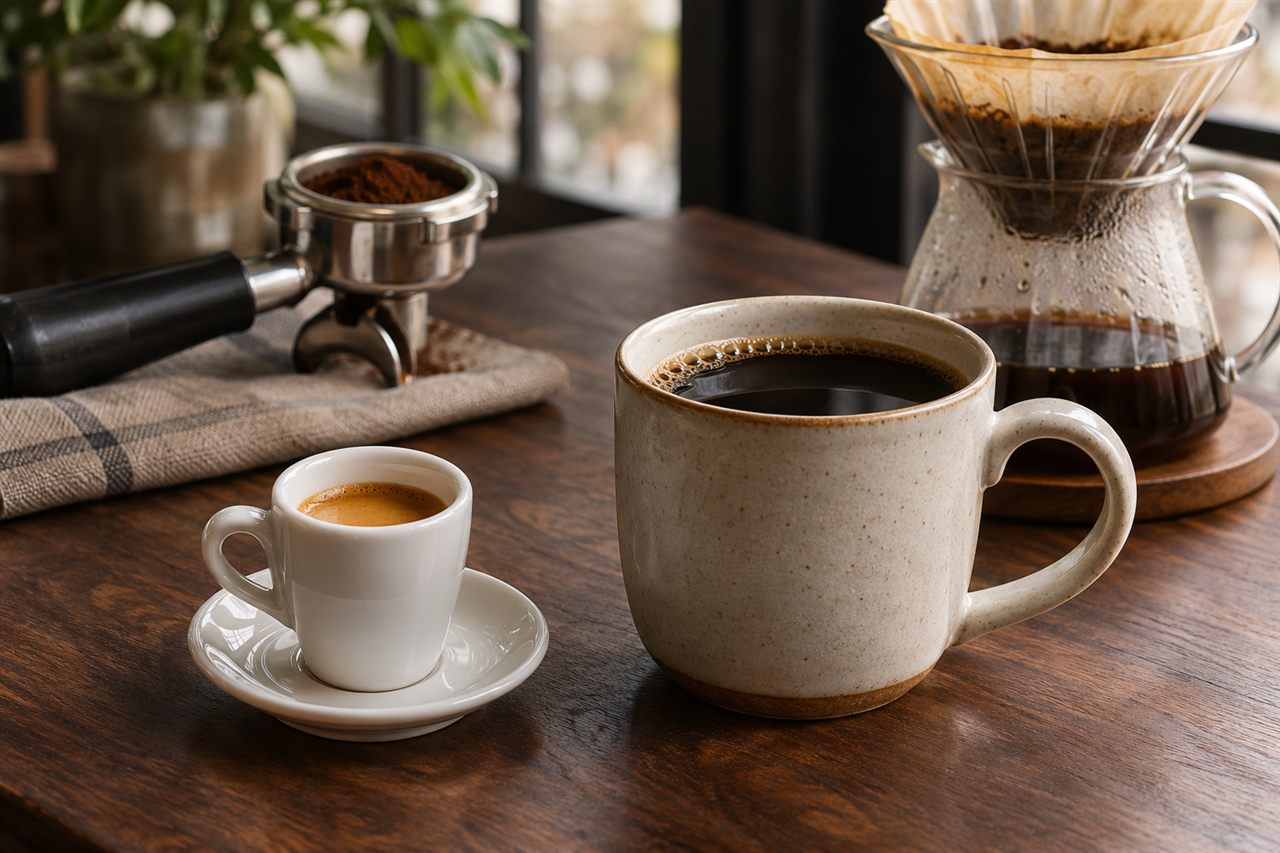
Espresso is coffee. The usual comparison is espresso versus a larger cup of brewed or filter coffee. Both begin with roasted coffee beans and water, but espresso uses a fine grind and pressurized hot water to produce a small, concentrated drink in seconds. Filter coffee typically sends water through grounds and a filter over several minutes. Cup size, texture and recipe make a bigger practical difference than the idea that one is “real” coffee.
What espresso means
The National Coffee Association espresso guide describes a concentrated brewing method using pressure and finely ground coffee. A barista grinds a dose, distributes and tamps it in a portafilter, and lets the machine push water through the bed. The resulting shot may have a foam layer called crema. Crema can be part of the presentation, but its presence alone does not establish whether a shot tastes balanced. Espresso beans are not a separate botanical kind of bean; a roaster may label a blend “espresso” because it is intended to taste good through that method.
A cup of filter coffee generally uses a different grind and a longer contact time, with paper or metal filtration. The Americano versus coffee distinction adds another layer: an Americano starts with espresso and adds hot water after extraction, while drip coffee is extracted as a full cup. Both may be black and similar in size. Naming the method helps you predict the drink more accurately than judging by the color.
Compare the finished cup, not just the beans
A drip coffee is usually a larger serving with a lighter body and no espresso crema. Espresso is short, dense and often more intense per sip. The same beans can taste different across these methods because grind, pressure, contact time and filter change what reaches the cup. Roast choice also matters. A coffee labeled for espresso is a recommendation, not a machine requirement, and beans intended for filter can sometimes make an interesting shot after adjusting the recipe.
Coffee-shop terminology can be confusing. A single or double refers to the number of shots or basket recipe, but doses and output volumes are not perfectly standardized across shops. A lungo sends more water through the puck; a ristretto stops sooner; an Americano adds water after a normal extraction. Milk drinks such as latte and cappuccino use espresso as a base but include milk volume and texture. If you need a comparable order, ask the cafe about its actual shot size and how many shots go into the cup.
Caffeine: concentration is not total amount
Espresso is generally more concentrated by volume, but a larger mug of filter coffee can contain more caffeine in total. The National Coffee Association caffeine FAQ explains that caffeine content depends on coffee, serving and preparation. It is misleading to compare one ounce of espresso against eight or twelve ounces of drip without saying whether the question is caffeine per ounce or caffeine per drink. Double shots, large takeaway cups and added espresso shots make the range wider.
If caffeine is a concern, check the serving sold by the cafe or the product label rather than relying on a rule such as “espresso is stronger.” Flavor intensity and caffeine amount do not map neatly onto one another. A short shot can taste bold while delivering less caffeine than a much larger brewed coffee. A decaffeinated espresso is also possible; decaf refers to the bean treatment, not a special brewing apparatus.
Equipment and repeatability at home
A home espresso setup needs a machine that can brew consistently under pressure, a suitable grinder, a scale and time to learn dose, yield and grind adjustments. A capsule machine simplifies the routine but limits the choice and control of its system. A moka pot produces a concentrated stovetop coffee, although it does not use the same pressure or yield the same drink as a standard espresso machine. A filter brewer or pour-over generally costs less to begin and is easier when making several larger cups.
The Specialty Coffee Association describes espresso as an evolving set of brewing practices rather than one immovable flavor recipe. That means a useful home goal is repeatability and a cup you enjoy, not copying one universal shot time. Record the coffee dose, beverage output and grind setting. If the shot runs too fast and tastes thin, adjust the grind or recipe; if it stalls or tastes harsh, reassess. For drip, start with a reliable coffee-to-water ratio, then change grind or brew time deliberately. Cleanliness and fresh coffee matter in both methods.
Which should you order?
Choose espresso if you want a small concentrated drink, enjoy its texture, or want the base for a milk drink. Choose filter coffee if you want a larger black cup to sip over time and a method with simpler equipment. An Americano may suit someone who likes an espresso-derived flavor in a longer drink. None of these is inherently a higher-quality choice; poorly made espresso and well-made filter coffee exist, and vice versa.
When reading a menu, ask three questions: How large is the drink? How was it extracted? What has been added after extraction? Those answers resolve most “espresso versus coffee” confusion. If a cafe offers the same beans as espresso and filter, tasting both is an informative comparison. Begin without sugar or milk if you want to notice method differences, then prepare the drink in the way you actually like to consume it.
A fair tasting exercise
If you want to understand the difference firsthand, ask a cafe whether it serves one coffee as both espresso and filter. Sip the espresso first in a small amount, then taste the filter cup after it cools slightly. Notice body, aroma and how flavors change as the drinks cool. You are comparing two preparations of a similar coffee, which is more informative than comparing a dark espresso blend with an unrelated light filter roast. The exercise still cannot isolate every variable, because the recipes and equipment differ.
At home, avoid measuring “strength” by color alone. A dark roast can look strong but still be brewed thin, and a light roast can produce a concentrated espresso. A scale helps with dose and beverage output; tasting helps decide whether the numbers produced a satisfying result. If you prefer milk, repeat the comparison with the same measured amount of milk in each drink. That will show whether you like espresso's concentrated base or a larger filter cup with milk. Your preferred everyday drink may differ from your favorite pure tasting sample.
Common questions
Is espresso a type of bean?
No. Espresso describes a brewing method. Roasters may select or blend beans with espresso brewing in mind, but the plant and roasted seed are still coffee.
The same roasted beans can be prepared by several methods. A grinder and recipe tuned for each method make a fairer taste comparison.
Does espresso have more caffeine than a cup of coffee?
It can have more caffeine per ounce, yet a larger brewed cup can have more in total. Compare the actual serving sizes and number of shots; the coffee and recipe also affect the result.
A double espresso and a large filter cup change the totals again. Look at the whole order rather than equating dark flavor with more caffeine.
Is an Americano the same as drip coffee?
No. An Americano is espresso diluted with hot water after brewing. Drip coffee extracts water through grounds for the whole cup. Their sizes can overlap, but the brewing histories differ.
An Americano may still suit someone who prefers a larger black drink. The preparation, rather than the appearance, explains the distinction.
Can I use filter-roast beans for espresso?
Often yes, with a suitable grinder and recipe adjustment. A roast label is a flavor suggestion rather than a rule. Very different roasts may need a different grind or yield to taste balanced.
Start with a small adjustment and taste it. A light roast can be bright as espresso, while a dark roast may need care to avoid harshness.
This article draws on published brewing guidance and explains common preparations. It does not claim a hands-on equipment test, a universal recipe or a health benefit. Check the exact cafe menu and equipment instructions for your own cup.