
FIKA NYC / THE COFFEE JOURNAL
Jungle juice recipes: measured fruit punch for a crowd
Make a clearly labelled fruit punch with a measured adult version and a separate alcohol-free option, plus batching and cold-storage guidance.
Originally published Editorially updated
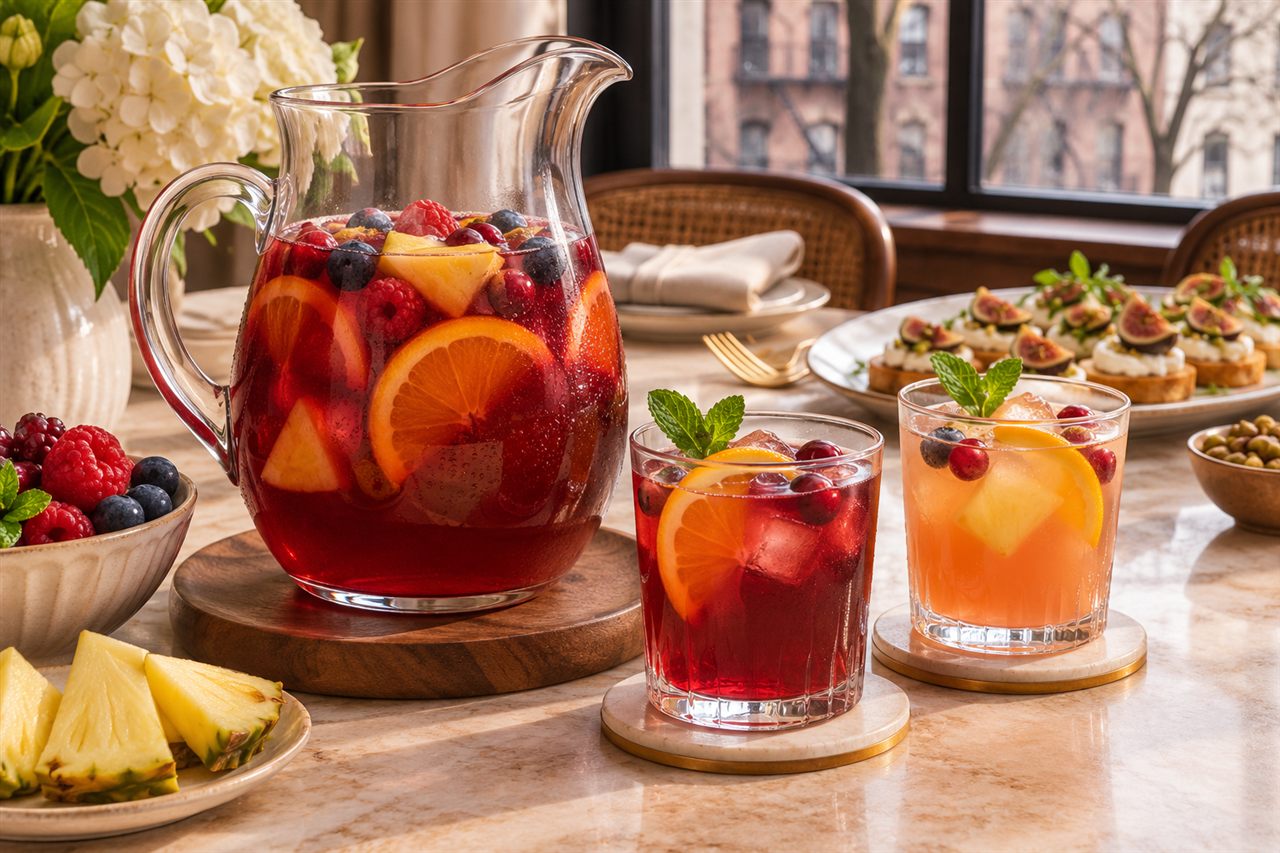
“Jungle juice” usually means a mixed fruit punch for a gathering, sometimes with alcohol. Recipes vary wildly, which makes ingredient labels and measured servings more useful than a supposed classic formula. These two versions share a citrus and berry base: one has a known amount of rum for adults, and the other is alcohol-free. Prepare them in separate, clearly marked pitchers so guests can choose knowingly.
Set up a fruit-punch base
For approximately eight small servings, combine four cups of pasteurized cranberry juice, two cups of pasteurized orange juice and one cup of pasteurized pineapple juice in a clean chilled pitcher. Add one washed orange cut into thin rounds and a cup of washed berries if you want visible fruit. Chill the base before the gathering. Taste it before sweetening; the packaged juices may already be sweet. A squeeze of lemon can sharpen a flat blend, while a little cold water can soften one that is too intense.
Use a measuring jug so the batch can be repeated and its ingredients disclosed. The FDA explains added sugars on beverage labels; check juice and soda labels rather than assuming that a fruit-flavored bottle has no added sugar. The same base can be made with less sweet juice by changing the proportions and tasting. Avoid adding an unknown collection of leftover spirits or syrups: it makes the strength impossible to estimate and creates an unclear ingredient list for guests.
Measured adult punch
For an adult version, add six fluid ounces of 40% ABV rum to the seven-cup fruit base, stir, and divide the finished batch into eight equal small servings. That is less than one ounce of rum per serving, assuming the division is even; it is not a guarantee about the strength of an overfilled glass. The CDC describes a U.S. standard drink as 1.5 fluid ounces of 40% spirits. Write the rum amount and number of portions on a card beside the pitcher so guests can judge what they are taking.
Do not top up the same pitcher with more spirits after guests have started serving. If you need a second batch, measure it from scratch. Different rums have different alcohol percentages, so check the bottle and recalculate when substituting. Fruit and sweetness can hide the taste of alcohol, but they do not reduce its amount. Keep the adult version accessible only to guests of legal drinking age and offer water and the alcohol-free alternative alongside it.
A separate alcohol-free pitcher
For a zero-proof version, use the same seven-cup fruit base and add one cup of chilled sparkling water just before serving. Divide into eight glasses, each with ice if desired. The bubbles give it a party-drink feel without an alcohol substitute. Keep this pitcher and its ladle separate from the adult one. A distinct garnish, such as a lime wheel on the alcohol-free glasses, helps guests distinguish them, but a clear written label is still necessary.
If a guest avoids a particular ingredient, a simple orange–pineapple version may be easier than a multi-fruit punch. State whether the juices are from concentrate and whether the soda contains sweeteners when that matters. Do not describe the alcohol-free option as suitable for every diet without checking the packaged ingredients. Preparing a deliberate nonalcoholic version also means nobody has to ask the host to improvise one during service.
Fruit, ice and presentation
Add washed fruit only after cutting it on a clean board. The FDA recommends rinsing produce under running water before preparation and does not recommend soap or detergent on fruit. A large ice block or an ice-filled serving bowl can keep the punch cold without quickly watering every glass. If you put ice directly in the pitcher, expect the flavor to change as it melts. Put berry pieces in glasses rather than a narrow dispenser tap if clogging is likely.
Use a sturdy food-safe pitcher with enough capacity for the full batch and room to stir. A transparent vessel makes the fruit visible, but the important presentation detail is the label. Name the spirits, strength, and major fruit ingredients for the adult version; mark the other version “no alcohol.” Replace a used ladle if it crosses between pitchers. These details are simple and more useful to guests than an elaborate color or garnish.
Cold holding and fresh-juice choices
The FDA explains that untreated fresh juice can carry pathogens. Pasteurized packaged juices are a practical choice for a crowd, especially when guests may include people more vulnerable to foodborne illness. If you squeeze fresh juice, wash the fruit and equipment carefully and understand that washing does not pasteurize the drink. The punch contains cut fruit as well, so keep the prepared batch cold and bring out a smaller portion at a time.
The FoodSafety.gov advises keeping cold foods cold and refrigerating leftovers promptly. Make the punch base in advance only if it will remain covered and refrigerated. Discard a batch that has been left warm too long or contaminated by shared cups or utensils. Do not return ice or fruit from a served glass to the communal pitcher. A small refillable pitcher is easier to manage safely than a huge uncovered bowl.
Adjusting a batch without losing track
A tart punch can be softened with measured cold water or a sweeter juice, but write down what you added. A cloying punch can be brightened with lemon or diluted with sparkling water in individual glasses. Avoid correcting a weak adult punch by pouring spirits into the bowl by eye. If you truly need a different strength, make a fresh measured batch and label it separately. This protects consistency and lets people track what a serving contains.
If the gathering is outdoors, keep backup juice and prepared fruit in a refrigerator or cooler with adequate cold packs until needed. A self-service station should have clean cups, a dedicated ladle for each pitcher and a place to dispose of used fruit. The value of this recipe is not a mythical “best” combination; it is a fruit punch that tastes pleasant, can be repeated, and gives guests a clear choice.
Common questions
What alcohol is usually in jungle juice?
There is no fixed recipe; rum and vodka are common in informal punch. This version specifies 40% ABV rum so the amount can be calculated.
If you substitute another spirit, check its label and record the amount. A recipe with unmeasured mixed spirits cannot give guests a reliable serving estimate.
Can I make it without alcohol?
Yes. Use the fruit base and add chilled sparkling water just before serving. Keep its pitcher and utensils separate from the adult batch.
Label it clearly and check packaged juice ingredients for any guest who avoids a particular fruit or sweetener.
Can I prepare it the night before?
You can mix the pasteurized juice base in a clean covered pitcher and refrigerate it. Add sparkling water and ice close to serving.
Keep cut fruit cold as well. Follow cold-holding guidance during a gathering, and discard punch that has been left warm too long.
Does the fruit make an alcoholic punch safer to drink?
No. Fruit changes flavor and presentation, not the amount of alcohol in the serving. Sweetness may make the spirits less obvious by taste.
Measure the spirits, divide the batch into known portions, and offer a clearly labelled alcohol-free option and water.
This article draws on published brewing guidance and explains common preparations. It does not claim a hands-on equipment test, a universal recipe or a health benefit. Check the exact cafe menu and equipment instructions for your own cup.