
FIKA NYC / THE COFFEE JOURNAL
Peet’s vs Starbucks: compare coffees, not slogans
Compare Peet’s and Starbucks by current whole-bean range, roast choice, brewing method and cafe order, without declaring an unsupported winner.
Originally published Editorially updated
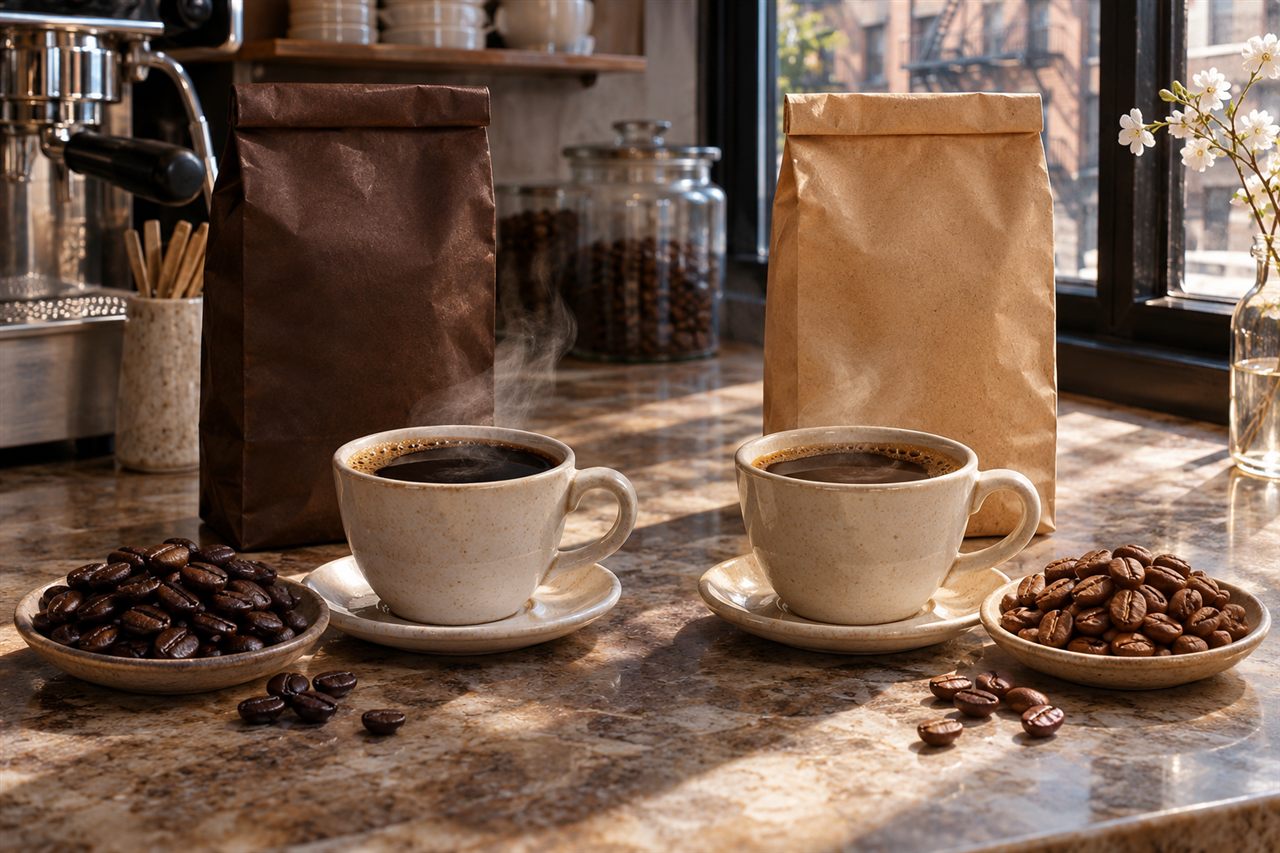
Peet’s and Starbucks each sell many coffees, so a brand-wide winner is hard to justify. One dark roast from Peet’s and one medium roast from Starbucks will differ for reasons beyond the logo. A useful comparison matches the roast range and brewing method, then checks the current bag or cafe order. This article uses each company’s published product listings and explains what a reader can test; it does not claim a new Fika tasting panel or universal quality score.
Start with comparable products
The Peet’s online coffee collection currently includes light, medium and dark roasts and lists recommended brewing methods for many products. The Starbucks at Home whole-bean collection includes several roast styles as well. Both catalogs can change. If you want to compare home coffee, pick two whole-bean bags with similar roast positioning and brew them with the same grinder, water and method. Comparing a fresh whole-bean bag with an old pre-ground one would mostly test freshness and storage.
At a cafe, match drink type and size. A plain brewed coffee from each chain is a different comparison from a sweetened iced latte. Note the number of espresso shots, milk, syrup and serving volume. Price, available menu items and store execution differ by location and date, so check the current menu at the stores you would visit. One excellent or poor cup from a single branch does not prove the entire brand is the same everywhere.
Roast is a more precise starting point
Peet’s lists dark and medium options alongside brighter coffees, while Starbucks offers several roast styles. The Starbucks at Home FAQ also describes multiple espresso-roast choices for home brewing. Dark roast can emphasize roasty and smoky notes; lighter roasts may show more origin character, but the exact cup depends on bean and recipe. Match roast levels as closely as possible, then compare what you actually taste.
A bag's tasting notes are descriptions from the seller, not guarantees. Use them to choose candidate coffees, then brew with a repeatable recipe. If one cup tastes bitter, change grind or dose before concluding the brand is inferior. Our roast comparison explains why color and flavor are not a complete measure of caffeine or quality. The aim is to identify a coffee that suits your palate and equipment.
Brewing changes the result
The National Coffee Association describes drip brewing as one common way to make a larger cup. Espresso, press pot and cold brew extract differently and can flatter different coffees. Peet’s product filters identify intended brewing methods; Starbucks also sells coffees for a range of home methods. If you compare the same two bags, use one brewing method first. Otherwise you cannot tell whether the beans or equipment caused the difference.
Keep coffee and water amounts consistent, grind freshly if practical, and let both cups cool enough to taste comfortably. Write down aroma, body, sweetness, acidity and aftertaste without forcing a numerical score. If both are pleasant in different ways, that is a useful result. A milk drink may change the ranking because milk can soften or mask some coffee notes. Compare black cups first if you want to evaluate the coffee itself, then test your usual preparation.
Brand history is context, not a verdict
Peet’s company timeline describes Alfred Peet’s role in teaching early Starbucks founders about roasting and supplying beans. That is an interesting historical link, but it does not establish which current coffee tastes better. Both companies have expanded their offerings since their early years. A story about origins or size can shape expectations; it should not substitute for a current product comparison.
The old Fika page used broad language about a “battle of the baristas.” Quality also depends on the barista, machine maintenance, service pace and recipe at a particular store. If cafe service is your main interest, visit the two locations you would actually use at a comparable time and order the same style. The result may say more about those local stores than about every bag sold under the brand name.
Price, availability and convenience
A bag's shelf price is only one measure. Compare price per ounce or gram, package size, roast or best-by information where supplied, shipping and how quickly you will use it. Cafe drinks should be compared at the same size and with the same additions. Promotions, loyalty offers and menu prices change, so this article does not publish a permanent “cheaper brand” claim. Check the current checkout or menu before spending.
Convenience may decide the choice for someone who passes one shop daily. Home brewers may have access to both through supermarkets or online stores. Availability of a particular blend can vary. If you want a consistent house coffee, try a small bag before buying several. If you like variety, buy one comparable roast from each brand and note which recipe worked. These observations will be more relevant to you than a generic brand ranking.
A fair comparison method
Select one roast from each current catalog in the same broad style, match the format, brew with the same ratio and water, and taste without knowing which cup is which if someone can help. Repeat on a second day if you care about a purchase decision. A single taste can be influenced by brewing error or mood. If you are comparing cafes, record the drink size, shot count and additions. This is a suggested method for readers, not a claim that Fika performed the experiment.
Choose the coffee you enjoy and can buy at a reasonable current price. Peet’s and Starbucks each offer more than one flavor profile, and neither is inherently best for every drinker. If your preference changes with espresso versus filter, keep separate conclusions for those methods. A useful review names the exact products and conditions; it does not ask a logo to stand in for dozens of coffees and thousands of cafe preparations.
A useful notebook entry names the exact bag, roast date or best-by information where available, grind, water amount and brew method. Repeat the comparison when both coffees are reasonably fresh. Otherwise you may be deciding which bag spent longer on a shelf. If a cafe visit matters more than home brewing, note service speed and drink consistency separately from the coffee bean flavor.
Common questions
Is Peet’s always darker than Starbucks?
No. Both brands offer more than one roast level. Check the specific current bag rather than assuming a company-wide style.
Match roast categories before comparing flavor, and remember that labels are only a starting point.
Which brand has more caffeine?
Caffeine depends on the coffee, dose, cup size and brewing method. Neither brand name alone gives a reliable answer.
Use a product-specific figure if supplied, especially for a cafe drink with multiple espresso shots.
Which is cheaper?
Prices vary by bag, store, region, promotion and date. Compare the same weight or drink size at the time you buy.
A discount on one purchase does not establish a permanent value difference.
Did Fika taste both brands for this guide?
This updated article does not claim a new hands-on tasting. It uses current brand catalogs and suggests a reproducible comparison readers can do.
A valid taste verdict would identify the exact coffees, recipes and dates rather than assigning one result to both entire companies.
This article draws on published brewing guidance and explains common preparations. It does not claim a hands-on equipment test, a universal recipe or a health benefit. Check the exact cafe menu and equipment instructions for your own cup.