
FIKA NYC / THE COFFEE JOURNAL
Ristretto vs espresso: a shorter extraction explained
Compare ristretto and espresso by water through the puck, cup size, flavor and caffeine, and learn how to order or pull the shorter shot.
Originally published Editorially updated
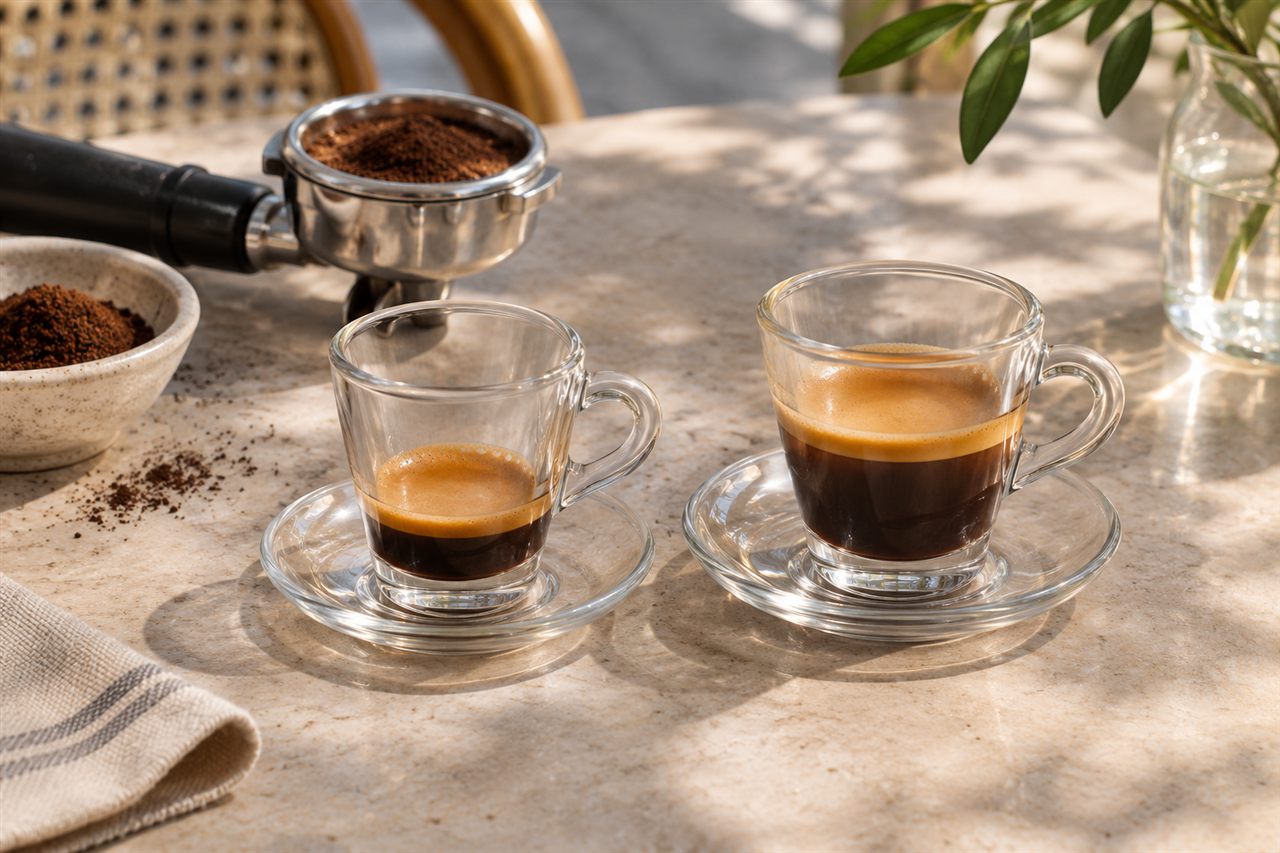
Ristretto means “restricted” or “shortened.” It is an espresso-style shot stopped earlier, so less water passes through the prepared coffee bed. Compared with a cafe's usual espresso recipe using a similar dose, it yields a smaller drink. That shorter extraction can change balance and texture, but it does not create a separate coffee bean or guarantee a sweeter cup. The specific result depends on the beans and recipe.
The recipe, not a special bean
Both ristretto and espresso use finely ground coffee, a prepared basket and pressurized hot water. The main recipe change is the amount of beverage allowed to leave the machine. A barista might use the same dry coffee dose and stop the ristretto at a lower liquid weight than the normal shot. Some shops also adjust the grind to reach a preferred flavor, so ordering terms are not perfectly standardized. Ask how the cafe makes its ristretto if you want to compare like with like.
A machine-button example comes from Nespresso Original guidance: it lists 25 ml for ristretto and 40 ml for espresso. Those figures describe that product system, not a binding worldwide definition. In a specialty cafe, baristas may describe a ristretto by the relationship between dry dose and beverage yield instead of a fixed milliliter mark. The important idea is the restriction of output relative to the ordinary espresso recipe.
Taste and texture without a promise
A shorter pull often feels denser because less water reaches the cup. It may emphasize early-extracted flavors and leave some later-extracted compounds behind. Depending on the bean and grind, that could taste rounded and sweet, sharp and underextracted, or simply different. The Specialty Coffee Association describes changing definitions and practices around espresso, a useful reminder that there is no single flavor guaranteed by a label.
A ristretto is sometimes marketed as invariably sweeter, less bitter or stronger. Those are not reliable promises. “Stronger” might mean flavor concentration, total dissolved coffee, or caffeine, and each needs its own measurement. A short, intense sip can still have less beverage and potentially less total extracted material than a longer shot from the same dose. Taste a ristretto beside the cafe's normal espresso before deciding which style suits the beans.
Caffeine: small does not mean caffeine-free
The National Coffee Association caffeine FAQ emphasizes variation in caffeine by coffee and preparation. A ristretto may extract less caffeine from the same dose when stopped earlier, but there is no dependable universal percentage. A double ristretto uses two portions of coffee and may contain more caffeine than a single standard espresso. The number of shots and coffee dose matter more than the small look of the cup.
People also confuse concentration with total caffeine. A ristretto can taste exceptionally concentrated per milliliter while containing a different total caffeine amount from an espresso. If a cafe gives specific caffeine information, use that figure. Otherwise, keep your estimate conservative and remember that extra shots contribute extra coffee. Decaffeinated beans can be prepared as ristretto too; the short method alone does not remove caffeine.
How to pull one at home
Start with a well-prepared espresso recipe and a scale under the cup. Keep the same coffee dose and stop the output earlier than your normal shot. Record dose, yield, time and taste. A very fast, sour result may need a finer grind or a different coffee; a harsh result may reflect an unsuitable recipe or beans. Make one change at a time so you can understand what helped. The scale is more useful than trying to judge a small output by eye through crema.
If you use an automatic or capsule machine, choose a product designed for the short setting where possible. Pressing stop early on a beverage designed for a longer extraction may produce a drink you like, but it is a taste experiment rather than proof of a universal ristretto recipe. Clean the machine according to its instructions; old coffee residue can confuse a comparison. Keep water and cup temperature similar when tasting two shots.
When to choose ristretto or espresso
Choose ristretto when you want a smaller, denser shot and are curious about the earlier part of extraction. Choose a regular espresso when you want the cafe's usual balance and serving size. In a milk drink, a ristretto base can change how the coffee comes through the milk, but the result depends on the shot count and milk volume. If you want a longer black drink, consider the opposite direction: a lungo extracts longer, while an Americano adds water after extraction.
On a menu, ask whether “single ristretto” means one shorter pull or whether the drink normally contains two shots. That matters for both flavor and caffeine. There is no need to treat the shortest option as automatically more refined. The best order is the one whose taste and portion suit you, made consistently with the beans at hand.
A careful side-by-side tasting
For a clear comparison, use the same coffee and dry dose in two prepared baskets. Pull one to your usual espresso yield and stop the other earlier. Record the liquid output and the approximate time. Taste each after it cools enough that temperature is not the main difference. Note body, sweetness, sourness and aftertaste separately. If the shorter shot tastes sharp, it may need a different grind, dose or coffee; do not conclude that all ristretto tastes sharp.
Some cafe drinks use two short shots in place of one regular espresso. That changes the dose and makes a different comparison from one shot stopped early. If you are ordering for caffeine or trying to recreate a drink at home, ask how many baskets or capsules are used. In a milk drink, the smaller yield can be masked by a large milk volume; a small drink may reveal the flavor difference more clearly. Try the plain shot once, then decide whether the combination works in your preferred milk order.
A short shot is also a practical reminder to taste the coffee while it is fresh. Its small volume cools quickly, and a cold ceramic cup can change the experience. Warm the cup if your equipment allows, then compare the two drinks at similar temperatures. If the barista recommends a particular recipe for the beans on offer, begin there before requesting a shorter pull. The word on the menu is a starting point for a conversation about taste.
Common questions
Is ristretto a different roast?
No. It is a shorter espresso-style extraction. A cafe may choose particular beans or roast for it, but the term refers to how the shot is made.
A ristretto can be pulled from beans sold for espresso. The important changes are dose, grind and the amount of liquid allowed into the cup.
Is ristretto stronger than espresso?
It can taste more concentrated because the output is smaller. That does not prove it has more caffeine or more total extracted coffee than a larger shot from the same dose.
Ask what “strong” means in the conversation: concentrated taste, a larger coffee dose, or more caffeine. They are separate questions.
Does ristretto have less caffeine?
It may extract less from the same dose when the pull stops earlier, but there is no fixed amount. A double ristretto uses more coffee than a single shot, and coffee choice changes the answer.
If you are limiting caffeine, do not assume a tiny cup is negligible. Ask about the number of shots or capsules in the order.
What is the opposite of ristretto?
A lungo is a longer espresso-style extraction with more water passing through the grounds. An Americano is also longer in the cup, but its extra water is added after extraction.
A double shot may also look larger, but it changes the coffee dose. The lungo comparison keeps the distinction focused on extraction length.
This article draws on published brewing guidance and explains common preparations. It does not claim a hands-on equipment test, a universal recipe or a health benefit. Check the exact cafe menu and equipment instructions for your own cup.