
FIKA NYC / THE COFFEE JOURNAL
Lungo vs espresso: more water through the puck
Learn how a lungo differs from an espresso, why it is not an Americano, and how volume changes flavor, texture and caffeine estimates.
Originally published Editorially updated
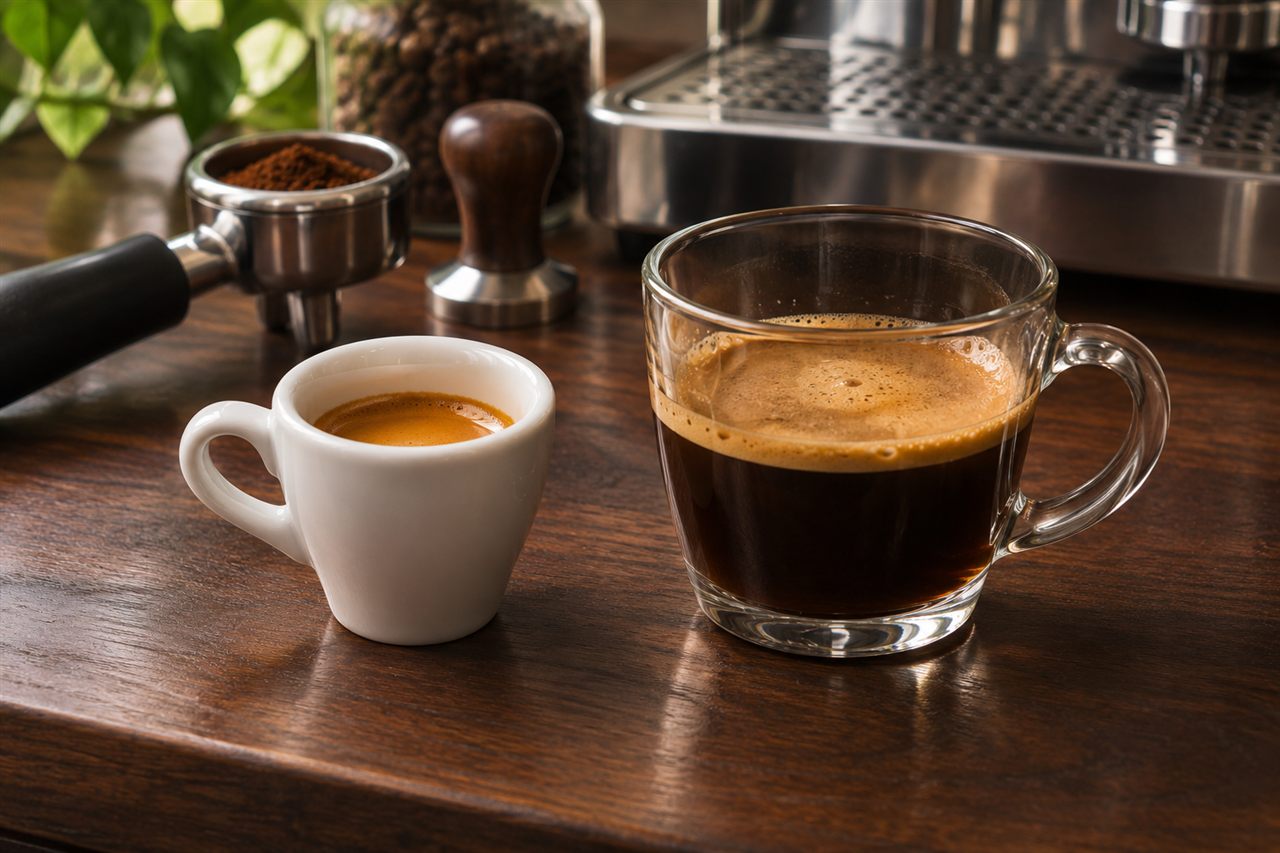
Lungo means “long” in Italian. In coffee use, it generally means an espresso-style extraction that continues farther, pushing more water through the same prepared coffee bed. The resulting drink is larger than a shorter espresso recipe. An Americano may be similarly sized, but its extra water is added after the shot. This difference in when the water meets the coffee is the heart of the comparison.
Follow the water through the coffee
A standard espresso shot starts with ground coffee in a basket and hot water pushed through under pressure. For a lungo, the brewer lets more beverage flow through that same puck. The coffee dose might stay similar while the yield rises. Shops and machines do not agree on one mandatory volume or brew ratio, so “lungo” is best read as a relative recipe: longer than that shop's usual espresso. Asking for the approximate cup size is more useful than assuming every cafe means precisely the same thing.
One brand-specific illustration is the Nespresso Original guidance, which describes 40 ml espresso and 110 ml lungo selections, with a 25 ml ristretto option. Those are button sizes for that system, not universal standards for every cafe, basket or capsule. If a capsule is intended for a particular volume, running much more water through it may make a thin or unpleasant cup. Read its suggested setting and then use taste to decide.
Why the flavor changes
Continuing extraction collects additional soluble material from the puck while adding water to the finished beverage. That can lower perceived intensity per sip, yet it can also bring out drier or more bitter notes depending on the beans and recipe. The outcome is not simply “espresso diluted.” The water has spent additional time in contact with the grounds. The Specialty Coffee Association's discussion of water, acids and extraction illustrates why changing the extraction changes the balance of flavors rather than only the cup size.
A conventional espresso may have a thicker texture and more concentrated flavor. A lungo can feel more open and easier to sip slowly, or it can seem overextracted if the grind and coffee were tuned only for a short shot. Roast, basket, water, grinder and machine all affect this. Instead of judging by a fixed ideal number, taste the espresso recipe first, then increase yield in measured steps and notice what happens to sweetness, bitterness and body. Stop when the trade-off no longer suits you.
Lungo, Americano and double espresso
An Americano is made by adding hot water to an already extracted espresso. In a lungo, the additional water passes through the coffee puck. An Americano therefore preserves the espresso extraction recipe before dilution, while a lungo changes the extraction itself. A double espresso uses a larger coffee dose, typically from a double basket, rather than just running more water through the same single-dose puck. A larger cup can be produced in three different ways with three different taste outcomes.
If you want a longer black drink but dislike the late-extraction flavor of a lungo, try an Americano. If you like espresso texture and want more coffee material in the cup, ask about a double. If you enjoy a longer extraction and its particular taste, order a lungo. Menu labels vary, so say how large and how intense you would like the drink. Our Americano guide explains how that option differs from filter coffee as well.
Caffeine and cup size
A longer extraction may draw more caffeine from the same coffee dose, but the difference cannot be given as a reliable universal number. The National Coffee Association notes that caffeine depends on dose, variety, preparation and serving size. A lungo is not automatically twice as caffeinated because its volume is larger. Adding plain hot water to make an Americano does not add caffeine after the shot; pulling a second shot does add coffee and changes the total.
If you are tracking caffeine, count the coffee dose and shots first, then look for cafe or capsule product information. Do not infer caffeine from bitterness, crema thickness or the word “long.” A larger cup may feel milder while still containing caffeine from the grounds. Likewise, a shorter espresso can taste intense without having the highest total caffeine on the menu.
Make a controlled comparison at home
Use the same beans, dose and basket for two pulls, weigh the beverage output and keep all other settings as steady as you can. Pull the first to your usual espresso yield. For the second, keep the shot running for a greater yield. Taste both at a similar temperature. The longer shot may run at a slightly different flow rate as the puck changes, so record both output and time rather than treating a button label as a complete recipe.
If the longer result tastes washed out, grind finer only if your machine and coffee allow a balanced flow; alternatively return to the shorter shot and add hot water afterward. If the longer cup is pleasant, note the ratio so you can repeat it. Capsules and automatic machines offer less control, so follow the manufacturer's volume recommendations before experimenting. In either setting, the useful distinction remains where the extra water goes.
Mistakes that obscure the comparison
Do not compare a single lungo from one machine with a double espresso from another and attribute every difference to extraction length. The coffee dose, beans and water may have changed. Similarly, a lungo served in a large mug may look weak because of the vessel, while a normal espresso in a demitasse looks intense. Use the same glassware and measure both yields if you are testing at home. Let the drinks cool to a similar temperature before deciding which has more bitterness or sweetness.
A preset “long coffee” button may use a proprietary capsule recipe or an entirely different brewing sequence. Consult your machine manual to learn what it does. If it simply extends water through one puck, it is closer to the lungo distinction discussed here. If it adds water after brewing, the drink is closer to an Americano. If it grinds and brews a larger coffee dose, the comparison changes again. Knowing what the machine actually does is more useful than its button name.
Common questions
Is a lungo just a big espresso?
It is a longer espresso-style extraction, usually with more water passing through the same coffee bed. The result is larger, but there is no single volume that every cafe uses.
Different cafes use different output targets. If you need a certain volume, ask the barista rather than relying on a single fixed definition.
Is a lungo the same as an Americano?
No. A lungo runs extra water through the coffee grounds. An Americano adds hot water to a finished espresso. This changes extraction and can change flavor.
You can compare them at the same final size by adding water to the espresso. The taste may still differ because the extraction was shorter.
Does a lungo have double the caffeine?
Not necessarily. A longer yield from the same dose does not double the starting coffee. Caffeine varies by bean, dose and recipe; a double shot uses more coffee and is a different order.
The starting dose limits how much caffeine is available to extract. If you need precise guidance, look for a manufacturer or cafe figure.
Can every espresso capsule make a good lungo?
No. Capsule systems often specify a suitable volume for each product. Passing much more water through a capsule intended for a short shot can make it thin or harsh. Follow the capsule guidance and taste the result.
A capsule intended for lungo can be a good starting point. The suggested volume reflects the maker’s recipe for that specific product.
This article draws on published brewing guidance and explains common preparations. It does not claim a hands-on equipment test, a universal recipe or a health benefit. Check the exact cafe menu and equipment instructions for your own cup.